Ed Friedlander, M.D., Pathologist
scalpel_blade@yahoo.com

No texting or chat messages, please. Ordinary e-mails are welcome.

|

|
 |
 |
 |
 |
|
|
Cyberfriends: The help you're looking for is probably here.
This website collects no information. If you e-mail me, neither your e-mail address nor any other information will ever be passed on to any third party, unless required by law.
This page was last modified January 1, 2016.
I have no sponsors and do not host paid advertisements. All external links are provided freely to sites that I believe my visitors will find helpful.
Welcome to Ed's Pathology Notes, placed here originally for the convenience of medical students at my school. You need to check the accuracy of any information, from any source, against other credible sources. I cannot diagnose or treat over the web, I cannot comment on the health care you have already received, and these notes cannot substitute for your own doctor's care. I am good at helping people find resources and answers. If you need me, send me an E-mail at scalpel_blade@yahoo.com Your confidentiality is completely respected. No texting or chat messages, please. Ordinary e-mails are welcome.
 I am active in HealthTap,
which provides free medical guidance from your cell phone.
There is also a fee site at
www.afraidtoask.com.
I am active in HealthTap,
which provides free medical guidance from your cell phone.
There is also a fee site at
www.afraidtoask.com.
 If you have a Second Life account, please visit my teammates and me at the Medical Examiner's office. |

|
 |
With one of four large boxes of "Pathguy" replies. |
 I'm still doing my best to answer
everybody.
Sometimes I get backlogged,
sometimes my E-mail crashes, and sometimes my
literature search software crashes. If you've not heard
from me in a week, post me again. I send my most
challenging questions to the medical student pathology
interest group, minus the name, but with your E-mail
where you can receive a reply.
I'm still doing my best to answer
everybody.
Sometimes I get backlogged,
sometimes my E-mail crashes, and sometimes my
literature search software crashes. If you've not heard
from me in a week, post me again. I send my most
challenging questions to the medical student pathology
interest group, minus the name, but with your E-mail
where you can receive a reply.
Numbers in {curly braces} are from the magnificent Slice of Life videodisk. No medical student should be without access to this wonderful resource.
 I am presently adding clickable links to
images in these notes. Let me know about good online
sources in addition to these:
I am presently adding clickable links to
images in these notes. Let me know about good online
sources in addition to these:
 My team:
pathology.org -- my cyberfriends, great for current news and browsing for the general public
EnjoyPath -- a great resource for everyone, from beginning medical students to pathologists with years of experience
Medmark Pathology -- massive listing of pathology sites
Estimating the Time of Death -- computer program right on a webpage
Pathology Field Guide -- recognizing anatomic lesions, no pictures
Freely have you received, freely give. -- Matthew 10:8. My site receives an enormous amount of traffic, and I'm still handling dozens of requests for information weekly, all as a public service.
Pathology's modern founder, Rudolf Virchow M.D., left a legacy of realism and social conscience for the discipline. I am a mainstream Christian, a man of science, and a proponent of common sense and common kindness. I am an outspoken enemy of all the make-believe and bunk that interfere with peoples' health, reasonable freedom, and happiness. I talk and write straight, and without apology.
Throughout these notes, I am speaking only for myself, and not for any employer, organization, or associate.
Special thanks to my friend and colleague, Charles Wheeler M.D., pathologist and former Kansas City mayor. Thanks also to the real Patch Adams M.D., who wrote me encouragement when we were both beginning our unusual medical careers.
If you're a private individual who's enjoyed this site, and want to say, "Thank you, Ed!", then what I'd like best is a contribution to the Episcopalian home for abandoned, neglected, and abused kids in Nevada:

My home page
More of my notes
My medical students
Especially if you're looking for information on a disease with a name that you know, here are a couple of great places for you to go right now and use Medline, which will allow you to find every relevant current scientific publication. You owe it to yourself to learn to use this invaluable internet resource. Not only will you find some information immediately, but you'll have references to journal articles that you can obtain by interlibrary loan, plus the names of the world's foremost experts and their institutions.
Alternative (complementary) medicine has made real progress since my generally-unfavorable 1983 review. If you are interested in complementary medicine, then I would urge you to visit my new Alternative Medicine page. If you are looking for something on complementary medicine, please go first to the American Association of Naturopathic Physicians. And for your enjoyment... here are some of my old pathology exams for medical school undergraduates.
I cannot examine every claim that my correspondents
share with me. Sometimes the independent thinkers
prove to be correct, and paradigms shift as a result.
You also know that extraordinary claims require
extraordinary evidence. When a discovery proves to
square with the observable world, scientists make
reputations by confirming it, and corporations
are soon making profits from it. When a
decades-old claim by a "persecuted genius"
finds no acceptance from mainstream science,
it probably failed some basic experimental tests designed
to eliminate self-deception. If you ask me about
something like this, I will simply invite you to
do some tests yourself, perhaps as a high-school
science project. Who knows? Perhaps
it'll be you who makes the next great discovery!
Our world is full of people who have found peace, fulfillment, and friendship
by suspending their own reasoning and
simply accepting a single authority that seems wise and good.
I've learned that they leave the movements when, and only when, they
discover they have been maliciously deceived.
In the meantime, nothing that I can say or do will
convince such people that I am a decent human being. I no longer
answer my crank mail.
This site is my hobby, and I do not accept donations, though I appreciate those who have offered to help.
During the eighteen years my site has been online, it's proved to be one of the most popular of all internet sites for undergraduate physician and allied-health education. It is so well-known that I'm not worried about borrowers. I never refuse requests from colleagues for permission to adapt or duplicate it for their own courses... and many do. So, fellow-teachers, help yourselves. Don't sell it for a profit, don't use it for a bad purpose, and at some time in your course, mention me as author and William Carey as my institution. Drop me a note about your successes. And special thanks to everyone who's helped and encouraged me, and especially the people at William Carey for making it still possible, and my teaching assistants over the years.
Whatever you're looking for on the web, I hope you find it, here or elsewhere. Health and friendship!



Name and describe the AIDS virus(es). Outline the essential lesions in AIDS. Tell what tissues the virus specifically attacks, and describe the anatomic pathology, the usual labs for diagnosis and monitoring, and the key molecules.
Describe the natural course of HIV infection. Tell what viral and host factors might affect transmission and rate of progression. Tell what we know about true non-progressive and slowly-progressive HIV infection.
Describe Kaposi's "sarcoma", as seen in AIDS patients, and the name and family of the virus that causes it. Describe the other quasi-cancers in these patients.
Name and describe the other common infections in AIDS patients. List characteristics common to these infections.
Describe the nervous system changes in HIV infection, and explain the basis of HIV-related problems with hemostasis.
Tell who is at high risk, who is at low risk, and who is at minimal risk for AIDS. Explain how to test for AIDS virus.
Describe in human terms the effect of the AIDS epidemic.
No quizbank for this unit. We usually think of good questions together at the end of the lecture.
|
|
|
|
|
|
 KCUMB Students
"Big Robbins" -- Immuno
Lectures follow Textbook
HIV INFECTION ("AIDS", "acquired immunodeficiency syndrome", retroviral immunodeficiency, "slim disease", etc., etc.) pathology Arch. Path. Lab. Med. 114(3), Whole issue, March 1990 (still great); updates Ann. Int. Med. 134: 761 & 978, 2001; J. Allerg. Clin. Imm. 110: 3, 2002; molecular pathogenesis of the immunodeficiency Nat. Med. 9: 854, 2003. All still good.* While [Noam] Chomsky insisted "We must act as sensitive and responsible human beings", [Michael] Foucault replied that such ideas as responsibility, sensitivity, justice, and law were merely "tokens of ideology" that completely lacked legitimacy.
-- Roger Kimball,"New Criterion" 1993
INTRODUCTION
The anatomic pathology of HIV infection and its treatments are now well-characterized. However, the human side of the disease is still rapidly changing. I have tried to assemble a current overview of the published materials for you. If you can add to or correct anything in this handout, please do so, in class or after.
THERE ARE ALSO A GREAT MANY OBVIOUS UNTRUTHS TOLD ABOUT AIDS AND RELATED SUBJECTS. One reason that you study disease in medical school is so that you can help answer the public's questions about pop claims -- both those with some claim to legitimacy, and the rest. I have tried to help you do this, here and elsewhere.
The biopsychosocial aspects of AIDS and its related problems are very special and sensitive. It is hard for anyone, from whatever perspective, not to be upset and worried about AIDS! Again, if you disagree with anything I say about AIDS, please say so.
HIV infection covers a tremendous range of symptomatology, pathology, and pathophysiology.
Like syphilis and lupus, you can say, "He or she who knows HIV, knows medicine". This lecture
will introduce terms and concepts that you will use for the rest of your lives.
and lupus, you can say, "He or she who knows HIV, knows medicine". This lecture
will introduce terms and concepts that you will use for the rest of your lives.
The medical literature now refers to "commercial sex workers / CSW's / SW's" instead of "prostitutes". See JAMA 271: 196, 1994, Lancet 343: 86, 1994. I am not implying anything else by using this term. You also know already that not everybody engaging in this "work" is an adult and/or ever had a choice.
The term "MSM" or "men-who-have-sex-with-men" has replaced "gay / bisexual" in discussions of HIV transmission, which is simply common sense. It's what a man does or does not do, rather than what he thinks about himself, that determines his risk.
* Transfemales and the risk for HIV -- no real surprises Am. J. Pub. Health 103: 1485, 2013.
* For a minority-group-identity activist's objections
to the new terminology, see Am. J. Pub. Health 95: 1144, 2005.
I've concluded that these people are impossible to please.
AIDS, the full manifestation of HIV infection, is a devastating infectious disease that has been very much with us since the late 1970's.
The immunodeficiency is caused by damage to T-helper cells and dendritic macrophages by a recently-evolved retrovirus (human immunodeficiency virus, HIV, HIV-1; formerly HTLV-3/LAV) or its close relatives. Koch's postulates have been met, and a virulence gene (nef) located (today's final proof of etiology).
In AIDS, there is very little effective cellular immunity. A host of opportunistic infections occur until death eventually results.
By now, there is no honest doubt that HIV causes AIDS.
* Your patients and others will ask you, so here goes...
* The principal HIV-doubter (Peter Duesberg) is a former bench gene chemist who claims that AIDS is caused by homosexuality, drug abuse, and AZT. He uses the classic pseudoscientist's techniques of (1) mistaking unanswered questions for refutations, (2) groundlessly attacking the characters and motives of those doing honest research, and (3) telling some outright, obvious lies. See Science 241: 514 & 515, 1988; Nature 358: 13, 1992; Nature 362: 103, 1993; Lancet 341: 658, 1993; Br. Med. J. 312: 216, 1996 (anyone who wasn't born yesterday can recognize the obfuscation and special-pleading in his reply.) Or pull up his own stuff on Medline; it speaks for itself. There are a few other HIV doubters (a Nobel celebrity also known as an astrology proponent engages in some idle speculation: Nature 369: 434, 1994; more recently Jonathan Wells and Phillip E. Johnson, the two "intelligent design" movement leaders), but nobody with any medical or infectious disease qualifications.
* All the stuff that these people are directing toward the public nowadays is mud-slinging, conspiracy talk, character smears (including mine; I no longer answer my crackpot mail), and claims of being persecuted geniuses. This alone assures me of what's really going on. Bunko artistry takes many forms, but is always directed toward the same basic human emotions -- the desire to believe ugly lies in order to feel intellectually and morally superior. You cannot reason with these people; don't get drawn into their game.
* Duesberg also claims that mutations do not cause cancer, period. His ideas about aneuploidy, as summed up in his article in Scientific American May 2007, are nothing new, and I cannot make any sense out of his denying the role of mutations. (In the accompanying editorial, Scientific American stated he was clearly wrong about HIV.) His previous bizarre article in Proc. Nat. Acad. Sci. 97: 3236, 2000 is a fine example of the disinformation artist's technique of misrepresenting the information contained in the other scientific papers. In 2000-2001, one of our students (who said he "hadn't believed it could be as bad as Ed said, but it was") demonstrated this in lab as an alternative to a case presentation. Any takers this year?
* In 2000, President Mbeki of South Africa endorsed Duesberg's claims, and compared the scientific consensus about HIV to the vilest racial bigotry (Lancet 356: 225 & 1541, 2000; Nature Medicine 7: 1170, 2001; Br. Med. J. 321: 67, 2000; Br. Med. J. 323: 650, 2001; Nature 404: 907, 2000; Nature 406: 113, 2000; Nature 407: 280, 2000). In particular, Mbeki banned administration of HIV prophylaxis to pregnant women in his country to protect their unborn children, and as prophylaxis to women who have been raped (Br. Med. J. 318: 1507, 1999). The outcry from both scientists and humanitarians was massive and appropriate, especially at the World AIDS Conference in 2000. Yet Mbeki continued to stonewall until late 2002, when he was defeated in court. In 2001, half of Mbeki's expert panel, which he packed with Duesbergites, recommended garlic, ginsing, and music therapy instead of condom distribution (KC Star April 5, 2001). In August 2003, his people moved once again to ban nevirapine to prevent HIV transmission to newborns (Lancet 362: 451, 2003).
* Mbeki, a master politician, was surely not so naive as to really believe in Duesbergism or music therapy. Someone who is more cynical than I am would conclude the Mbeki just wanted reduce the burden that surviving orphans placed on his already-collapsing economy. Remember that 20% of South African adults were HIV-positive (maybe 5.3 million people total), there were 350,000 AIDS deaths per year, half the country lived below the poverty line (26th worst in the world at the time), 37% of people were unemployed (17th worst in the world), rape was (and is) extremely common (a very bizarre and terrible feature of life in "the New South Africa" -- even the traditionally far-left-wing journal Soc. Sci. Med. 55: 1231, 2002 acknowledges this), and that AZT cuts the risk of transmission to the child from about 1 in 4 to about 1 in 12. Then do the arithmetic. I had suggested at one time that the sly Mbeki was actually trying to draw attention to the need for medications in his country in order to get them donated. However, when outsiders actually tried to donate them, he blocked the efforts. His health secretary, Dr. Mannto Tshabalala-Msimang, was much-ridiculed for her promotion of raw garlic and lemon peel for AIDS. More on the Mbeki government's overall massive indifference to the health of the citizens: NEJM 348: 750, 2003. Thankfully, Mbeki and his hated health secretary left power in late 2008, admist much rejoicing from scientists and AIDS advocates. History will decide the number of deaths that his policies caused, but it must be in six figures -- one scientific group put it just above 300,000.
* HIV doubting is still around, especially in Africa (Nat. Med. 11: 581, 2005). Of course, a few postmodernists have bought into it (Soc. Sci. Med. 58: 703, 2004 by a sociologist who says he cannot understand how scientific inquiry is different from religious dogmatizing.) Militant HIV-doubter Christine Maggiore ("Alive and Well AIDS Alternatives") died in 2008; she also caused the death of her child. Multimillionaire vitamin guru Matthias Rath even claimed to have the backing of the UN and international science groups (including "The Perth Group", evidently their own invention -- their rhetoric is based on "public debates" and legal harrassment, but never testifying, the traditional methods of disinformation artists.) The claim to support from the real scientific community is an obvious complete fabrication. See Nat. Med. 12: 369, 2006. Even a South African court has now banned Rath: Lancet 372: 15, 2008. In October 2008, Rath dropped his suit for libel against Britain's venerable Guardian newspaper, and he was ordered to pay 220,000 pounds to cover their legal expenses.
* There's no science here, but the politics is ripe: many people are hurting and confused, and HIV-doubting plays to this. If you have any doubt that the HIV-doubters are bunko-artists and their dupes, consider this: There is also a large disinformation industry claiming that the HIV virus was bioengineered as a tool for genocide by the CIA, the apartheid regime / white racists, the vaccine companies, or whoever. Notable among these folks is retired dermatologist and conspiracy buff Alan Cantwell ("The Cancer Microbe", "AIDS and the Doctors of Death", etc.), better-known for claiming that bacterial infection is fundamental to carcinogenesis. If the Duesbergites believed their own stuff, they would attack these people, and be attacked in return, with the same venom that both campaigns reserve for honest science.
As a physician, society grants you status and special privileges, expecting in return that you will know and do whatever actually helps sick people. All beautiful rhetoric aside, you are betraying society's trust if you "keep an open mind" or "respect opposing views" from people who are obviously trying to deceive the public.
 www.AIDStruth.org
Real scientists organized
to debunk HIV doubters
The virus is now widespread, but the disease is transmitted only by the most intimate contact or sharing.
The principal features of AIDS are (1) VULNERABILITY TO INFECTIONS BY MICRO-ORGANISMS THAT ORDINARILY DO NOT PRODUCE SEVERE DISEASE IN HUMANS (Pneumocystis and dozens of others), including pseudo-cancers that are actually infections -- aggressive Kaposi's "sarcoma", less often B-cell lymphomas) and/or (2) NERVOUS SYSTEM DAMAGE.
The disease attacks the brain, spinal cord, and peripheral nerves. MILD TO SEVERE NERVOUS SYSTEM DAMAGE often develops even in the absence of immunodeficiency (for example, Arch. Path. Lab. Med. 114: 643, 1990). A great deal is being written about possible mechanisms of nervous system injury, but we still have many questions about how it really happens.
The most characteristic feature of HIV involvement of the nervous system is GIANT CELL ENCEPHALITIS, the presence of granuloma-type giant cells without classic granulomas. Probably microglia (i.e., the brain macrophages) recognize the gp120 on each others' surfaces and this results in their fusion.
{37378} HIV giant-cell encephalitis
|
|
|
|
|
|
In the early years, researchers distinguished stages of the disease, which mirrored how depleted the CD4 count was:
AIDS: Kaposi's or opportunistic infections
AIDS-related complex: milder opportunistic infections (remember cryptosporidiosis,
candida,
zoster)
Persistent generalized lymphadenopathy: just that; we now call this "the clinically latent period"
Asymptomatic but immune-damaged carriers: just that; we now call this "the clinically latent period"
Healthy carriers, i.e., normal immune systems. All of these people have the potential to transmit the virus.
The tendency nowadays is to treat all of these together as HIV-disease, and to base therapeutic protocols on the lab values.
* The late-1980's, early-1990's protocols for AIDS focused on CD4 counts ("Give anti-pneumocystis prophylaxis if the CD4 count goes below 200": Ann. Int. Med. 111: 223, 1989; "Give zidovudine when the CD4 counts drop below 500"; "but if you were asymptomatic, the side effects are as bad as the longer life is good..." NEJM 330: 738, 1994; etc., etc.).
In 1996 we began to prognosticate AIDS by quantitating the virus in the blood by PCR (Science 272: 1167, 1996; J. Inf. Dis. 175: 576, 1997). Today's assays can pick up 50 (or even fewer) copies/mL (Am. J. Clin. Path. 120: 268, 2003.)
And now we can also quantitate the HIV-1-specific cytotoxic T lymphocytes. Not surprisingly, these counts correlate inversely with viral RNA content (Science 279: 2103, 1998). This is of great interest to folks working on the AIDS vaccines, since these cells seem to offer protection even though serum antibodies don't.
Probably a few people RID THEMSELVES OF THE ESTABLISHED INFECTION ALTOGETHER (the untreated baby, NEJM 332: 833, 1995; the treated baby NEJM 369: 1828, 2013 -- follow-up shows the latter did relapse NEJM 372: 786, 2015), but it is very rare.
We know people survive EXPOSURE WITHOUT INFECTION, since many people with repeated exposure (CSW's, spouses of infected partners) have antibodies (typically mucosal ones) but no virus on board.
Some HIV-positive people present with, or remember, A BRIEF, ACUTE VIRAL ILLNESS (the seroconversion phase; "acute seroconversion illness"; "primary HIV infection") a few days to ten weeks following inoculation with the virus. The severity is highly variable. One percent of "the flu / infectious mono" that is bad enough to bring people to the doctor is acute HIV infection. There is a faint maculopapular ("little spots - little bumps") rash (* apoptosis of epidermal cells -- Am. J. Path. 126: 199, 1987), CD4 cells are greatly but briefly reduced (if you check) and the syndrome closely resembles infectious mononucleosis, with fever, malaise, adenopathy, and sore throat. It is extremely infectious. Starting treatment early, it was once hoped, may provide long-term viral suppression (Nature 407: 523, 2000) by a greatly-enhanced T-helper cells anti-gag response. Acute HIV updates; nobody knows whether to treat or not: J. Inf. Dis. 202(S2): S-267 & S-278, 2010; Am. Fam. Phys. 81: 1239, 2010; Am. J. Med. Sci. 345: 136, 2013.
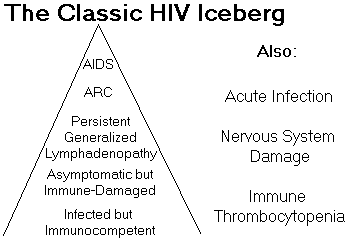
{05255} AIDS iceberg
{05256} AIDS iceberg
During the first two decades of the epidemic, HIV infection meant that you could expect to die from it. The new therapies are providing new hope, and more are on the horizon.
Most people who are found to be infected with HIV and are not treated effectively do progress to AIDS, with progressive drops in CD4 counts, over the following years, though the rate of progression is widely variable.
TRUE NON-PROGRESSIVE HIV INFECTION occurs in around 0.2% of infected people (i.e., their CD4 counts remain normal, their lymphoid histology remains normal, and only tiny amounts of virus are found in their blood). Their immune response to HIV is better, and/or they are heterozygous for deficiency of the second receptor CCR5 (CKR5), and/or they harbor a genetically-crippled bug.
Many other people progress very slowly.
People who are able to mount antibodies against Tat have slow or no progression (?; J. Inf. Dis. 191: 1321, 2005).
Some people infected with virulent strains seem to mount a better T-cell mediated immune response against the virus than others do. Figuring out "why" will be difficult.
Strangely, coinfection with seemingly-innocuous GB virus C ("good boy virus") seems to predict slower progression of the disease NEJM 345: 707 & 715, 2001; this is now clearly true: NEJM 350: 981, 2004.
The ongoing mystery of long-term nonprogressive HIV infection (now known to be present in maybe 1 in 200 infected patients not taking antiretroviral drugs, with viral load less then 10000 copies/mL called "elite controllers") summarized in hopeful terms: JAMA 304: 194, 2010.
By contrast, RAPID PROGRESSION is defined to be clinical AIDS within five years of infection. Especially, underclass status (IV drug use, other sexually transmitted diseases) has historically predicted faster progression, even where health-care access was the same as for the rich (Lancet 344: 1120, 1994). Before there was any medication for HIV infection, the average time between infection and the onset of AIDS was eight years: Science 240: 1333, 1988.
The HIV virus flourishes and multiplies, hidden within the cells of the immune system. How the virus accesses and takes over the cells: Nat. Med. 8: 673, 2002.
An untreated host turns over 20% of total-body HIV's per day. This is probably happening even during the "latent" period, deep in the tissues (Science 267: 483, 1995). When AIDS declares itself clinically, HIV redistributes itself throughout the body: Lancet 343: 383, 1995.
Originally, when AIDS had fully declared itself, death would follow in a few months (before zidovudine) to a few years (zidovudine-only era).
And of course, HIV-positive patients, regardless of how sick they are, can shed the infectious virus.
INFECTIONS
The combination of Kaposi's "sarcoma" and pneumocystosis in young MSM's led to the first recognition of AIDS in summer, 1981.
PNEUMOCYSTIS CARINII (now P. jirovecii, of course) is a protozoan that had long been known to cause serious pneumonias (lung infections) in immunosuppressed people.
{37484} pneumocystosis (silver has stained these black)
Since then, many other opportunistic infectious complications of the prodrome and full-blown syndrome have been described. These include, but are not limited to:
CANDIDA FUNGUS INFECTIONS
("yeast infections", "thrush"; very often affects the mucosal surfaces of
patients with AIDS and ARC)
HERPES SIMPLEX VIRUS INFECTIONS
(in AIDS patients, it's like an extensive full-thickness burn of the
epidermis, a necrotizing encephalitis, or a systemic disease.)
{05272} herpes around the anus in AIDS
CYTOMEGALOVIRUS INFECTION (CMV
(J. Clin. Inv. 121: 1673, 2011),
a common infection in ordinary people; devastating in AIDS
victims, who get intractable colon problems,
lose their retinas, lungs, brain, etc., etc.) Diagnosis
of CMV encephalitis is now made by quantitating the CMV genomes
in spinal fluid (Neurology 50: 693, 1998).
* Until 1991, the Rx for CMV of the retina was lifelong ganciclovir, and you couldn't take this with AZT, so you chose between living six months with your eyes or twelve months blind. Foscarnet ("Foscavir") became available in the early 1990's, and could be be administered concurrently with zidovudine: Science 254: 1113, 1991. Intravenous cidofovir: Ann. Int. Med. 126: 257 & 264, 1997. Oral valganciclovir: NEJM 346: 1119, 2002.
PARVOVIRUS B19, which is already familiar to you as a cause of sporadic arthritis in healthy folks and aplastic crisis in people with severe hemolytic anemia, causes a lasting anemia in AIDS patients. It's managed by intravenous immunoglobulin (Int. Conf. Aids. 10: 130, 1994; Br. J. Heme. 91: 90, 2008).
TOXOPLASMOSIS
(a protozoan infection; seldom serious in healthy people, but capable of destroying
the brain of an AIDS victim within hours. No, AIDS patients needn't get rid of their cats JAMA
269: 76, 1993.)
TUBERCULOSIS: Arch. Path. Lab. Med. 124: 1267, 2000.
It's still very common, and likely to show itself in unusual ways,
getting missed clinically.
At the height of the epidemic,
around 10% of AIDS patients died with active TB (NEJM 320: 545, 1989), and AIDS
patients were largely responsible for the dramatic increase in TB at the time (JAMA 261:
436, 1989). TB is the major health risk that a HIV-infected co-worker, classmate, cell-mate,
college roommate, etc., poses to healthy people -- and this is not a trivial concern! See Am. J. Med.
89: 451, 1990; in Africa, HIV-positive TB sufferers infecting their
HIV-negative neighbors is a tremendous problem (NEJM 358: 1089, 2008). Often the AIDS-patient's TB is a reactivation of one's earlier, mild infection,
yet it is also very contagious between AIDS patients (NEJM 326: 1514,
1992). You may see some granulomas despite the
poor immune function.
{42046} tuberculosis (the bugs are stained red)
ATYPICAL MYCOBACTERIAL INFECTIONS (M. avium, M. intracellulare, and M. kansasii, which cause an untreatable tuberculosis-like or diarrheal illness in AIDS patients; see Ann. Int. Med. 114: 366, 1991)
|
|
HISTOPLASMOSIS: a common fungus infection that is seldom serious in ordinary people; the agent
disseminates throughout the body of the AIDS victim.
Look for little two-micron yeasts.
* Histoplasmosis is the most common opportunistic infection in the Amazon basis and Guianas (Am. J. Trop. Med. Hyg. 84: 239, 2011).
CRYPTOCOCCUS:
infections with a fungus from pigeon droppings that can be rapidly lethal to an
AIDS victim, destroying brain, lungs, other organs. The fungus is a yeast that
has a capsule
and buds singly. See Arch. Path. Lab. Med. 110: 502, 1986, nice
pictures.
ASPERGILLOSIS,
lung infection with the familiar fungus from high school biology (NEJM 324:
654, 1991)
* COCCIDIOIDES is an important opportunist in areas where it is found; in AIDS it can cause a vicious meningitis as well as or instead of a pneumonia (Medicine 89: 251, 2010).
NOCARDIOSIS,
the famous hard-to-treat, weakly-acid-fast filamentous
bacterium, is a still-not-well-known AIDS opportunist (J. Lab. Clin. Med. 145:
156, 2005).
CRYPTOSPORIDIOSIS and related isosporidiosis, cystoispora, and microsporidiosis, protozoan infections. First known as veterinary pathogens, they infest the brush border of the gut, giving AIDS and ARC patients intractable diarrhea.
{18817} cryptosporidiosis (the bugs stain pale blue and are in the brush border, see 'em?)
OTHER COLONIC INFECTIONS include adenovirus and spirochetosis. Along with the better-known
Kaposi's, CMV,
cryptosporidiosis, and common bacteria, these cause the colonic
symptoms that are so troublesome for AIDS patients (small-volume diarrhea, tenesmus,
bright red blood per rectum). How to read a colon biopsy: Arch. Path. Lab. Med. 125:
1042, 2001.
* LEISHMANIASIS, the tropical protozoan infection carried by sandflies, is more severe in AIDS (Am. J. Trop. Med. 85: 55 & 906, 2011)
HAIRY LEUKOPLAKIA -- masses of white warts on the tongue, caused by
Epstein-Barr
(classic articles JAMA 259:
384, 1988; Am. J. Path. 139: 185, 1991.)
CAMPYLOBACTER -- a cause of diarrhea and sometimes sepsis.
HBLV / HUMAN HERPES VIRUS 6, which ordinarily causes a minor viral exanthem ("exanthem subitem" / "roseola") and infects B-lymphocytes, attacks T-cells in the presence of HIV and might greatly accelerate disease progression; Lancet 343: 555 & 577, 1994. It can also produce a fatal lung infection: Lancet 343: 577, 1994.
JC PAPOVAVIRUS, which causes PROGRESSIVE MULTIFOCAL LEUKOENCEPHALOPATHY, a brain disease of the immunosuppressed.
SYPHILIS
(notably neurosyphilis;
tougher to cure than in the non-HIV infected; see NEJM
331: 1469, 1994; unusual presentations
and overlapping stages Ann. Otol. 122: 435, 2013)
and other curious bacteria (Rhodococcus: Can. J. Inf. Dis. 1: 101, 1990 by the
UMKC team; odd rickettsia NEJM 323: 1573, 1581 & 1625, 1990, etc., etc.).
BARTONELLA HENSELAE, the bacillary angiomatosis / peliosis / cat scratch fever bug, usually acquired from cat scratches (JAMA 269: 770, 1993; JAMA 271: 531, 1994). Huge masses of bacteria pack endothelial cells, which they have caused to proliferate. (* Bartonella quintana is caught from lice.)
|
|
SCABIES, the common mite that gets the penis and finger-webs, is a grisly infection in AIDS (South. Med. J. 87: 352, 1994).
PENICILLIUM MARNEFFEI is an fungal opportunist in AIDS that is coming to be recognized more often (Arch. Path. Lab. Med. 121: 798, 1997; Arch. Path. Lab. Med. 128: 191, 2004), especially in Southeast Asia.
Trichophyton, pityrosporum (the seborrhea fungus), and some of the other trivial fungal infections of humans become more troublesome in AIDS.
HTLV-I: causes myelopathy especially when it's found with HIV (Neurology 48: 13, 1997)
If the patient also has hepatitis C on board, HIV makes it much more likely to progress to advanced liver disease (J. Inf. Dis. 207-S1: S13, 2013.)
* Whipple bacillus pneumonia in AIDS: Am. J. Resp. Crit. Care Med. 187: 1110, 2013.
Especially in HIV patients of African descent, a mysterious lymphocytic infiltration of the salivary glands with dysplasia of the ductal epithelium and eventual destruction of the glands is common (Arch. Path. Lab. Med. 124: 1773, 1999) -- by my old teammates at UMKC.
HERPES 8
/ HHV-8 / KSHV: a "tumor" virus ("Kaposi's sarcoma", lymphomas)
Note that these are mostly intracellular parasites that require cell-mediated killing (because the antibodies and neutrophils can't get to them). One infection follows another, until one finally kills the patient.
Neutrophil function is also somewhat impaired in AIDS (though this is not the primary problem), and bacterial infections can and do kill these people: J. Inf. Dis. 158: 627, 1989; kids are especially vulnerable (NEJM 325: 73, 1991).
KAPOSI'S SARCOMA (review NEJM 342(14), April 6, 2000.)
{05270} Kaposi's "sarcoma" in AIDS
{05257} Kaposi's in AIDS
{32447} Kaposi's, foot
|
|
{32448} Kaposi's, ankle
{18816} Kaposi's, histology (weird vessels,
especially
notice the red cells between the spindle cells)
Kaposi's "sarcoma" (in AIDS or not) is a pseudo-tumorous infection caused by
a
herpes virus (KSHV / Herpes 8,
Science 267: 959, 1995; Lancet 345: 759 & 761, 1995; NEJM
332: 1181 & 1186, 1995; NEJM 336: 163, 1997) that arises multifocally as nodules of bizarre
vessels in the deep dermis. In AIDS (as well as in non-HIV-related African Kaposi's), it is
aggressive and infiltrates the guts, body cavities, lungs (Chest 117: 410 & 1128, 2000), etc.
All about Kaposi's: Med. Clin. N.A. 81: 471, 1997.
* The individual bumps tend to be monoclonal and to exhibit some autocrine growth activity (Proc. Nat. Acad. Sci. 94: 979, 1997). KSHV carries a viral growth gene that interacts with cGMP system: Nature 385: 347, 1997. This makes it "neoplastic" only in the same sense that freckles are "tumors".
Kaposi's "sarcoma" features clusters of tiny apparent capillaries, without anaplasia (except perhaps late), budding off normal blood vessels. Eventually, it grows as massed bundles of reticulin-wrapped spindle cells, with red blood cells in slits between them. The dark pigment is hemosiderin.
In keeping with the etiology of a sexually-transmitted virus, around 40% of MSM's with AIDS in the pre-treatment era got Kaposi's "sarcoma", compared with only 10% of non-MSM AIDS patients. In one study, around 40% of San Francisco MSM's have HHV-8 on board, but none of 195 exclusively straight M's had it. NEJM 338:948, 1998.
We'll learn later about epidemic Kaposi's in Africa's virus belt, where it travels without requiring the help of the AIDS virus, and can remain stable or regress. Of course, it is a chronic viral infection made worse by malnutrition and other factors contributing to general ill-health. And we'll learn about Kaposi's in immunosuppressed transplant patients that remits when their immunosuppression is discontinued. (Obviously it isn't and never was a real cancer.)
MALIGNANT LYMPHOMAS (today's work Arch. Path. Lab. Med. 137: 360, 2013)
Malignant non-Hodgkin's lymphomas (mostly high-grade ones of B-cell origin) and microgliomas are the other common AIDS-associated tumors.
Around 2% of AIDS patients get primary lymphoma of the brain. The diagnosis is made (if it's made) by brain biopsy or autopsy, and the prognosis is dismal.
These lymphomas often show evidence of
Epstein-Barr virus
as etiologic agent (Medicine 70: 137,
1991) and/or myc activation. The brain lymphomas are
caused by
Epstein-Barr related (Lancet 338:
969, 1991).
Some of the lymphomas regress on HAART (Leukemia & Lymphoma 47: 750, 2006). The others can be treated as they are in HIV-negative folks, so long as retroviral therapy is continued, with about equally good results as for HIV-negative folks (Leukemia & Lymphoma 47: 1822, 2006).
Hodgkin's disease in the AIDS patient: Update Am. J. Clin. Path. 121: 727, 2004. About 10% as common as non-Hodgkin's lymphomas.
Some of the AIDS lymphomas are caused, instead, by KSHV (the Kaposi's virus; NEJM 332: 1186, 1995).
In keeping with the idea that these are virus-induced proliferations, and in contrast to lymphomas in the immune-competent, many (not all) are polyclonal (AIDS 8: 1025, 1994).
NERVOUS SYSTEM DAMAGE (Arch. Neuro. 54: 846, 1997; South. Med. Assoc. J. 94: 266, 2001)
Many patients who are infected with the AIDS virus develop clinically obvious brain infection.
This is often severe and persistent, with loss of memory, inability to concentrate, apathy, and eventually dementia ("AIDS-dementia complex"). Around 50% of AIDS patients have clinically apparent mental changes. HIV-related emotional-behavioral changes: Am. J. Psych. 147: 696, 1990; this often improves on HAART (Neurology 67: 311, 2006) -- today, all the antiretroviral regimens cross the blood-brain barrier (Neurology 76: 644, 2011).
Around 90% of AIDS patients have some form of brain damage at autopsy. Maybe half have HIV ENCEPHALITIS with multinucleated giant cells and/or very aneuploid glia and/or microglial-macrophage nodule formation (Classic articles Lancet 1: 309, 1989; Hum. Path. 22: 700, 1991; the major macrophage players Am. J. Path. 178: 2121, 2011), leading to substantial loss of brain tissue.
{05309} AIDS, brain atrophy
gp120 is a neurotoxin, causing macrophages and astrocytes to damage their neuronal neighbors (Nature 367: 113 & 188, 1994; Proc. Nat. Acad. Sci. 91: 494, 1994), very likely by glutamate-calcium excitotoxicity (more about this in CNS pathology). Obviously this is not the whole story, since the viral load never correlated well with the extent of brain damage.
* In transgenic mice, expression of tat is a potent neurotoxin (Am. J. Path. 162: 1693, 2003).
* The conventional wisdom that early HIV infection usually causes subtle brain damage seems not to be true: Arch. Neuro. 54: 179, 1997; Neurology 48: 223, 1997.
Other forms of damage to the nervous system are common.
Late in the disease, spinal cord involvement takes the form of "vacuolar myelopathy", with ataxia and spastic paralysis; neuropathology in Neurology 58: 479, 2002. Pathologists see vacuoles in the myelin itself or between the myelin and the axons; late, the axons may be disrupted and there's gliosis.
Guillain-Barré syndrome can happen during the infection.
Rarely, a viral meningitis occurs during the acute infection. Review: West. J. Med. 160: 447, 1995.
* A terrible syndrome with sudden necrosis of the basal ganglia, seen in untreated HIV patients with high virus levels who use cocaine, remains a minor mystery of medicine (Neurology 76: 787, 2011).
OTHER SYMPTOMS AND SIGNS
Weight loss, more muscle than fat ("cachexia"), is usual in AIDS and ARC, and in the terminal stages is extreme.
This probably has something to do with cachectin (alpha-TNF), and levels of this monokine increase in the serum as the disease gets worse.
Malabsorption, poor appetite, inflammation of muscle cells (visible on biopsy) and muscle cell apoptosis also must play a role.
Complexes of the virus and its antibody coat the platelets, causing thrombocytopenia by a type III immune mechanism.
gp120 is a B-cell superantigen and this may be why AIDS patients get an increase in total immunoglobulin (J. Immuno. 161: 6681, 1998).
In some AIDS patients, the glomerular visceral epithelial cells swell and become detached from the glomerular basement membrane. This results in heavy proteinuria ("nephrotic syndrome") and then permanent renal shutdown (NEJM 316: 1062, 1987; NEJM 321: 625, 1989; Ann. Int. Med. 150: 287, 1990). For some reason this is much less common nowadays than it used to be.
* HIV synovitis: Br. Med. J. 300: 1239, 1990; Arthr. Rheum. 34: 257, 1991.
Seborrheic dermatitis may flare (PITYROSPORUM), and the hair may thin and/or turn gray.
ACCELERATED ATHEROSCLEROSIS is now well-known in the HIV-infected population, and is a major cause of mortality. This may be due to the ongoing burden of infection, or the anti-retroviral medicines, or some other factor (J. Inf. Dis. 205 S3: S-355 & S-362 & S-368 & S-375, 2012).
IMMUNOLOGY
The first problem is that the virally-altered T4+ ("T-helper") lymphocyte in AIDS cannot recognize and respond to soluble antigens (NEJM 313: 79 and 112, 1985).
This may be due to an intrinsic T4+ cell defect, binding of virus gp120 protein to the CD4 receptors (seems most likely), or the result of the defective expression of HLA-DR on the dendritic macrophages that must process and present soluble antigens to the T4+ cell.
Actually, the first cells in which HIV appears after exposure are typically the dendritic macrophages, not the T-cells. Remember that macrophages also express CD4, the major AIDS receptor, as well as CCR5 (the co-receptor for the more commonly-transmitted strains of HIV).
A variety of expected T-helper cell responses are diminished or absent in infected cells. You'll learn these in other courses.
The envelope proteins of HIV themselves have several toxic effects on the natural killer (NK) cells as well (J. Imm. 176: 1107, 2006). The X4 subtype Interferes with function immediately; both major types eventually cause apoptosis. This begins during the acute infection (Blood 106: 3366, 2005).
The ability of the virus to establish itself is enhanced by T-cell activation by some concurrent infection.
A cell that is truly in G0 cannot be infected.
This probably explains why the disease is so much more easily transmitted to "fast-lane" MSM's and IV drug abusers (who have lots of infections and thus lots of activated immune cells) than to accidentally exposed health care personnel.
Soon, however, T4+ cells are greatly reduced in numbers as well as function. You'll learn what we know of the molecular biology in your other courses.
In the weeks following infection, circulating CD4 cells drop to about half their normal levels, then rebound.
The gp120 protein coats healthy T-cells, and the anti-gp120 antibodies and T-cells angry with gp120 probably help destroy them.
Another likely mechanism for T-cell destruction is the interaction between HIV g120 protein and the CXC chemokine receptor on the T-cell surface; this appears to activate the lysosomal self-destruction program (J. Clin. Inv. 116: 2078, 2006).
Even more striking and earlier changes in cell populations occur in lymphoid tissue (classic papers: Arch. Pathol. 109: 128, 1985; Arch. Pathol. 109: 33, 1983).
Even surviving T4+ cells and macrophages don't respond to antigens very well, and make very little interleukin 1, interleukin 2, gamma interferon, and so forth (Science 241: 573, 1988, more).
Part of the explanation is probably that viral gp120 (see below) plasters itself all over the CD4 proteins of T-cells and macrophages, rendering them ineffective.
Today many workers think that the last reservoir is phagocytized, non-integrated viruses in the dendritic cells of the germinal centers as being the reservoir. These will probably be impossible to eradicate. In any case, even in HAART-treated patients with excellent responses, the deep lymphoid tissue is never normal even morphologically (J. Inf. Dis. 186: 1092, 2002). Update on why a cure for HIV is unlikely in the near future: Lancet 381: 2109, 2013.
Patients almost all make antibodies against HIV; however, these do not rid the body of infection. Of course, this is part of why effective immunization will be so difficult.
THE AIDS VIRUSES ("HIV-1", "HIV-2")
{00448} HIV
The etiologic retrovirus was discovered in 1984 (Science 224: 479, 1984, afterwards NEJM 311: 1292, 1984) and was named HTLV-3 (human T-lymphotropic virus-III).
* The French co-discoverers named their isolate "lymphadenopathy associated virus" (LAV). This is the same virus.
The name was changed in 1986 to human immunodeficiency virus (HIV) -- now it's HIV-1.
gp120 binds to (and inactivates) the CD4 receptor on the T-cell.
You know that retroviruses use reverse transcriptase to synthesize DNA from an RNA template inside the infected cell. The DNA ("provirus") is then used to make more viruses.
Because reverse transcription is not very accurate, HIV changes its genotype during the infection. This is why it's so important not to miss a dose of combination drug therapy for fear of the emergence of a resistant strain.
First transmission of a drug-resistant strain from a noncompliant patient: NEJM 399: 307, 1998. This is now common (NEJM 347: 385, 2002).
AIDS virus is closely related phylogenetically to retroviruses in other primates, including macaques, mandrills, and African green monkeys. These are the various SIV viruses ("S" for "simian").
The darwinian lineage of the SIV family has been studied in depth. It is now clear that HIV is a simian infection that was transferred to human beings, and that this is the explanation for the sporadic cases that preceded the epidemic.
HIV-1 was SIVcpz transferred from chimpanzees, at least three separate times, in East Africa (Nature 397: 436, 1999).
HIV-2 was SIV transferred from a sooty mangabey monkey in West Africa (Science 287: 607, 2000; update on the origins of both NEJM 350: 1872, 2004); there have been several unique variants affecting one individual each after contact with a sooty mangabey.
Archival tissue studies have given us a much clearer picture of the true history of AIDS (Science 318: 5851, 2007).
AIDS is a zoonosis and occasional transmission from animals is to be expected (Science 287: 607, 2000.) In addition to the chimp and gorilla strains, a variety of SIV (simian immunodeficiency viruses) chronically infect monkeys and can be transmitted to humans who handle or eat them (Science 287: 607, 2000) -- humans make antibodies and clear themselves of the infection, and they are very common where "bush meat" (wild monkeys) are eaten. The main strain of HIV-I is a mutated form of the chimpanzee virus, genetically altered somewhat to propagate in humans. It could flourish only when conditions became right (i.e., when for whatever reason the average number of people infected by a patient -- R0 -- exceeds 1.0000.) It is easiest to believe that the social disruption and commercial sex work accompanying the forced labor camps under Belgian colonialism; the fact that many of the men were uncircumcised and the colonists brought guns to kill chimps for food, started the epidemic of HIV-M (main strain) around Kinshasa. People who look at the molecular evolution of HIV, which proceeds at a fairly predictable rate, believe the epidemic was well-underway around Kinshasa by 1960, and had begun decades earlier (Nature 455: 661, 2009). The rare HIV-P is derived from the gorilla SIV (Nat. Med. 15: 871, 2009). The oldest positive serum was from 1959 (NEJM 358: 1590, 2008). We now know that it was brought from Africa to Haiti by "migrant workers" (perhaps only one -- Proc. Nat. Acad. Sci. 104: 18566, 2007) in 1966, and came to the United States from Haiti in 1969. See below.
Of course, aggressive Kaposi's "sarcoma" has been recognized in Africa for several decades, and is seen even in HIV-negative patients (yeah, we knew it wasn't a tumor all along).
* David Carr, "the Manchester seaman" who died in England in 1959 "of AIDS" may or may not have had it. Investigators suspect a hoax; tissue chunks from two different people were in the bucket (Nature 374: 503, 1995; Lancet 148: 1363, 1996).
* Robert R(ayford), a teenaged male CSW, died of AIDS in St. Louis in 1969, the first AIDS death in North America. HIV was found in his preserved blood and tissue specimens.
Of course, there are numerous strains of HIV
The virus often changes its capsid, producing different strains even in the same patient. This is another reason that it will be hard to develop a vaccine.
HIV-2 is a second virus that also causes AIDS (Nature 326: 662, 1987; NEJM 316: 1180, 1987; the disease Ann. Int. Med. 118: 211, 1993).
HIV-2 patients usually have healthy CD4 counts, at least for many years, and many of these CD4+ cells react against HIV-2; this is now thought to be why the disease progresses more slowly. See J. Imm. 176: 6973, 2006.
HIV-2 also evolves more slowly within its host than does HIV-1 (J. Inf. Dis. 195: 726, 2007).
* HIV-1 Subtype O ("outlier") arose just past the HIV1-HIV2 evolutionary node. Pre-1995 screening tests may have missed it. See J. Virol. 68: 1581, 1994; Lancet 343: 1333 & 1393, 1994.
* Yet another highly divergent subtype-N strain (YBF 30): Nat. Med. 4: 1032, 1998. Detecting it is not a problem: J. Clin. Micro. 39: 1379, 2001. Update on all serotypes of HIV-1, and its evolution: NEJM 358: 1590, 2008.
The CD4 ( OKT4, "T4") antigen itself is the receptor for HIV (Nature 312: 763, 1984). It combines with gp120 protein of the virus).
Remember that it is the CD4 antigen that interacts with the HLA-DR antigens of the dendritic macrophages in antigen recognition (Nature 328: 626, 1987); the antigen is also present on dendritic macrophages.
SECOND RECEPTOR: An additional protein, either CCR5 or CXCR4, must also be present on the cell surface to allow most HIV RNA's to enter the host cell (Nature 381: 647, 1996). Homozygotes who lack the protein are immune to infection with the common (CCR5-tropic / macrophage-tropic) strains of HIV (Science 273: 1856, 1996), and heterozygotes have non-progressive HIV infection. Molecules: Lancet 351: 14, 1998.
CXCR4 is more abundant on T-cells, while CCR5's are more abundant on macrophages and neurons. The R5 strains of HIV smolder more in neurons and macrophages, which express lots of CCR5 (Am. J. Path. 152: 167, 1998). Nobody really understands why (Nat. Med. 5: 303 & 344, 1999.) The fact that the CCR5 strains are more common than the CXCR4 strains suggests to me that the cells that are usually infected first in a new infection are the dendritic macrophages.
* All about CCR5: JAMA 296: 815, 2006. Not surprisingly, one's genotype for this locus influences how well one responds to today's antiretroviral therapy: Nat. Med. 14: 413, 2008.
An HIV-positive patient (Timothy Ray Brown) receives a bone marrow transplant for leukemia from a donor lacking normal CCR5 and he is able to stop taking HIV medications: NEJM 360: 692, 2009.
Most transmission is of strains that are strongly trophic for macrophages, i.e., the R5 strains. Over time in an individual patient, strains that are cytolytic for T-cells emerge. These are called X4, CXCR4-using, or T-tropic, and this "phenotype switch" causes the immunodeficiency to become worse (Nat. Med. 4: 346, 1998).
* Yet another co-receptor, CX3CR1, when mutated, causes ultra-rapid progression of the
disease: Science 287: 2274, 2000.
* The proteins CCR3 and CCR5 are co-receptors for brain glia
(Nature 385: 645, 1997).
* The one consistently-identified HLA MCH Class I polymorphism affecting the rate
of the progression, a single amino-acid substitution,
is reviewed in NEJM 344: 1668, 2001.
Once the virus has gotten into one T-cell or dendritic macrophage, it can be transmitted to many more by direct transfer -- thus hiding from antibodies in the interstitial fluid.
Actually getting a viral-laden lymphocyte from one person into another person's bloodstream is evidently the most efficient way of transmitting the infection, which explains a lot about the epidemiology (JAMA 259: 3037, 1988). The naked virus has only limited ability to infect a new person; it works much better if it's carried in a live T-cell that then meets another's T-cell.
Duesberg notwithstanding, you can find HIV in everybody (that means EVERYBODY) with clinical HIV-type disease if you search for it. "HIV-negative AIDS" is clearly something different.
In 1992, we discovered patients in whom HIV could not be demonstrated by any means (including PCR), but who have progressive loss of CD4+ T-cells and sometimes opportunistic infections and/or AIDS-type quasi-cancers. Four separate institutions agreed that it existed, but found no evidence of a new immunosuppressive infectious disease: NEJM 328: 373, 380, 386 & 393, 1993. Today IDIOPATHIC CD4+ T-CELL LYMPHOPENIA is defined as CD4 counts under 300, or less than 20% of lymphocytes. It remains a minor mystery; there have been a few deaths caused by the immunosuppression, but most patients are asymptomatic. See J. Clin. Invest. 97: 672, 1996; J. Amer. Acad. Derm. 46: 779, 2002.
"HIV-negative AIDS" cannot possibly be AIDS, since there's no nervous system disease apart from the opportunistic infections. And it is probably not an infection, since allogenic bone marrow transplantation is curative: Bone Marrow Tr. 18: 813, 1996. I believe it is most often the result of T-cell-mediated autoimmunity against one's own CD4 cells.
ARC ("AIDS-related complex") -- still a useful distinction
Under the old nomenclature, unexplained fever, weight loss, diarrhea, fatigue, night sweats of greater than three month's duration, in a person with evidence of HIV infection is called AIDS-RELATED COMPLEX (ARC).
Often patients with ARC are troubled with minor infections, especially
candidiasis,
cryptosporidiosis, bad herpes
simplex and/or
zoster,
hairy leukoplakia, tinea pedis ("athlete's
foot"), tinea cruris ("crotch-rot"), others. Lymph nodes are usually enlarged.
ANATOMIC PATHOLOGY OF HIV INFECTION
You will learn what the various infections and lymphomas look like in AIDS soon enough, and Kaposi's "sarcoma" has been described above.
Even in the absence of infections or cancer, AIDS victims suffer profound depletion of their lymphoid tissues, and also generalized wasting of body tissues, especially muscle (cachexia).
{23350} AIDS, atrophy of lymphoid tissue (trust me
that this was a lymph node)
{05258} AIDS cachexia
In some tissues, patches of cells may be found undergoing apoptosis, usually a marker for cell-mediated cytolysis. (See Am. J. Surg. Path. 10: 531, 1986.)
For the original autopsy series of AIDS victims, read Arch. Pathol. 109: 737, 1985, Lancet 2: 85, 1988. For the most recent large series, see Arch. Path. Lab. Med. 126: 182, 2002. Taiwan's pathologists document that autopsy remains the gold standard, and that opportunitstic infections are often missed in life (J. Micro. 39: 310, 2006). The usual precautions in handling tissues seem to protect pathologists and pathology students against AIDS. Some autopsy pathology groups are now doing "tox" first and foregoing autopsy on HIV-positive and hepatitis C-positive bodies if the cause of death looks to be drugs: J. Clin. Path. 66: 1, 2013.
{20228} end-stage lymph node, AIDS; this used to be a lymph node, but almost all the lymphocytes are gone
|
|
The lymphadenopathy of ARC and persistent generalized lymphadenopathy superficiallly resembles that of other viral diseases.
There is florid hyperplasia of the germinal centers, and other nonspecific reactive changes in the nodes (debris, new vessels, etc., etc. -- Am. J. Surg. Path. 11: 94, 1987).
We now are discovering that there is much, much more to the story. Many of the lymphocytes in progressive HIV infection -- but not in stable or controlled infection -- are "regulatory T cells" (Treg cells), which actually suppress immune function in the node (Blood 108: 3808, 2006).
HIV TESTING
Growing the virus is difficult, PCR is costly, and the usual lab screen is to look for anti-HIV antibodies in the blood.
The classic "screening test" is an ELISA ("enzyme-linked immunosorbent assay") procedure; it was's usually positive by 6-8 weeks, but can take as long as 6 months or even longer. Today's ELISA's detect both p24 and HIV-1 (including subtype O) and HIV-2. Immunoassays for p24 turn positive earlier than the antibody, and are now much more reliable than in the past. Today's rapid antibody tests for office use are very convenient; positives do need follow-up with advanced testing, and PCR for viral load is the backup (testing is usually straightforward though some PCR's at low levels are false-positives).
The new protocol for the developed world is a p24 plus an antibody screen; at least one will usually be positive within two weeks of exposure. Confirmation uses a search for specific antibodies against HIV-1 and HIV-2 respectively. Follow-up will include PCR quantitation.
Uncle Sam tests his army for HIV for only $2.50 per soldier (not bad, NEJM 32: 963, 1995).
Beware: Rare AIDS patients NEVER seroconvert (J. Inf. Dis. 175: 955, 1997).
Blood banks, of course, do PCR on all units. Think about just ordering a PCR if you suspect the acute HIV infection syndrome. The virus is usually demonstrable in the blood in about 7 days after exposure, and peaks at 3 weeks (NEJM 356: 2073, 2007).
Probably it is good public health policy to include PCR testing in ALL HIV screening, at least those at high risk, since you'll pick up the 4% that are antibody-negative (mostly the acute infections, which are very contagious: NEJM 352: 1873, 2005; there are rare false-positive PCR's).
Today, anonymous testing is widely available, and as a result, people are getting diagnosed much earlier (JAMA 280: 1416, 1998).
Mail-in home HIV test uses a blood spot. It's remarkably accurate: Br. Med. J. 312: 1317, 1996; Arch. Int. Med. 157: 309, 1997. OraSure (mouth juice) HIV assay: JAMA 277: 254, 1997. Because of the benefits of HAART, started early, perhaps it's a good idea to ELISA everybody who's not abstinent or in a stable monogamous relationship every 3-5 years (NEJM 352: 586, 2005). More on this hard-to-answer topic: Ann. Int. Med. 145: 797, 2006.
AT RISK
The best moment in love is likely to be when the lover leaves in the taxi.
-- Michael Foucault
AIDS spread in the same populations as hepatitis B did in the mid-20th century. Everyone remembers the four H's (homosexual men, Haitians, heroin injecters, and hemophiliacs).
"Homosexual men" (MSM's):
Haitians:
As noted before, the virus first infected humans in Africa. The African virus was acquired there by Haitian "migrant workers" and brought to Haiti in 1966. The gay sex trade in Haiti prevented it from dying out, and American MSM's brought the infection to the US from Haiti in 1969 ("Patient Zero" was the most famous, but there were many others before him). Update on how the epidemic began and spread is now worked out from archival tissue samples (Science 318: 5851, 2007).
The explanation for AIDS among the little Haitian boys given in Ann. Int. Med. 99: 877, 1984 (they were sex slaves... er, CSW's), has been quietly and generally accepted. Other infected Haitians received injections through unsterilized needles in a folk medical practice. Haitians without other risk factors are no longer considered a special risk group.
Update on HIV in Haiti: Science 313: 470, 2006 ("making headway under hellacious circumstances")
Heroin (and other recreational intravenous drug) users:
In some populations, as many as 64% of IV drug abusers (men and women) were HIV positive in the peak years. (Br. Med. J. 300: 209, 1990). The statistics for New York City (JAMA 271: 191, 1994) stayed constant at around 50% during the peak years (ouch!), despite a shift from injecting to snorting heroin.
Blood on shared syringes readily transmits the virus. Users can prevent infection by rinsing syringes in hypochlorite ("Clorox") solution before sharing (unfortunately, this spoils rubber syringes).
IV drug abuse, and sex with IV drug abusers, is was the most common way in which HIV is was transmitted in the U.S. during the 1990's (Neuro. Clin. 11: 605, 1993, others), and probably still is today, though the reappearance of the high-risk gay lifestyles has shifted the numbers back toward transmission by anal sex.
* Fun to know: "During 1997,
20-26% of all people living with HIV in the United States... passed through a
correctional facility" (Am. J. Pub. Health 92: 1789, 2002).
AIDS transmission in prison ("Well, shall
we give them condoms?..." Arch. Int. Med. 154: 739, 1994).
"The first condom machine in a US jail": Am. J. Pub. Health 100:
982, 2010 -- everything went fine, no increase in sexual activity, everybody
seems to have agreed it was a good thing.
Hemophiliacs
Around 85% of patients with classic hemophilia (who received human-derived factor VIII) and hemophilia B (who receive factor IX) were positive in 1985 (Ann. Int. Med. 102: 753, 1985; Am. J. Med. 80: 345, 1986; NEJM 317: 1153, 1987). One percent of cases of AIDS have occurred in hemophiliacs.
Others at risk:
AIDS is a special risk for INFANTS OF HIV-POSITIVE MOTHERS. The virus crosses the placenta, and may also be transmitted in milk. Review NEJM 332: 298, 1995.
In 1990, 782 babies were born with HIV (JAMA 265: 1704, 1991). Without prophylaxis, the risk of transmission from an infected mother to her baby is about 25%. The new drugs clearly help prevent transmission to the child, and there are now laws requiring mothers-to-be to accept treatment. The new statistics show that AZT given to the pregnant mother cuts the rate of transmission from 19% to 3% (Br. Med. J. 324: 381, 2002).
Mothers can now be forced by law to comply, which upsets some people ("A woman's right to control her own body!") but not me. You, the physician, had better offer HIV tests to all pregnant women, but you had better NOT test if she refuses (Am. J. Ob. Gyn. 180: 259, 1999).
Prolonged rupture of the membranes (more than four hours) is, not surprisingly, a major risk: NEJM 334: 1617, 1996. C-sectioning HIV-positive moms seems to cut the risk in half: Lancet 343: 1464, 1994.
We now know that breast-feeding is indeed an efficient way of transmitting HIV: NEJM 325: 593, 1991. Providing formula instead results in a huge reduction in transmission: JAMA 283: 1167, 2000.
Anti-HIV IgA is likely to be present in milk; it does not protect the child (J. Ped. 149: 611, 2006).
In the poor nations, breast milk is clearly the best available food for newborns, both from the standpoint of nutrition and protection from infectious disease. Public health policy must weigh the 5-15% risk of the baby acquiring Mother's HIV infections against this fact. Today, the consensus seems to be to extend prophylaxis, rather than wean Baby early (NEJM 359: 130, 2008).
The ongoing complexities are shown by the observation that non-breast-fed children in Botswana, while less likely to be infected with HIV, are more likely to die overall, simply because of malnutrition (JAMA 296: 794, 2006; same for Zambia NEJM 359: 119 & 130, 2008 -- hence the case for extending antiretriviral therapy).
* Another means of transmitting AIDS from mother to child is the practice of pre-chewing food for Baby (Pediatrics 127: e1206, 2011.
HIV-infected children typically become symptomatic within a year (NEJM 321: 1791, 1989), though some may remain healthy up to ten years. Around half of these children (who now number in the thousands) have obvious brain damage (NEJM 319: 889, 1988), and they are also at increased risk for bacterial infections (pneumococcus, H.'flu, salmonella, others) and the more traditional AIDS pathogens. AIDS in children: J. Pediatrics 114: 1, 1989.
Also at (relatively low) risk are FEMALE PARTNERS OF INFECTED MEN. This includes wives and CSW's.
As AIDS turns into a straight's disease (Am. J. Med. 102 S4A: 2, 1997), CSW's are important vectors of AIDS in the poor nations. In late-20th-century Thailand, an "economic miracle" was driven largely by government promotion of sexual services not available elsewhere, and the night-life was dominated by unhygienic, uncircumcised, lascivious young men. Most of the CSW's were HIV-positive, and at least 12% of the young men (especially the unhygienic, uncircumcised, lascivious ones) were infected (Lancet 343: 86, 1994; they catch it easily Lancet 343: 204, 1994). Thai men wise up and start using condoms to prevent HIV infection: NEJM 335: 297, 1996. Promoting condoms to the CSW's at the sexually-transmitted disease clinic in Zaire: Lancet 344: 246, 1994 (it helps).
Likewise, in America's crack houses, teenaged girls CSW themselves for drugs; 40% of these girls are HIV-positive (NEJM 331: 1422, 1994).
By contrast, English CSW's are almost all HIV-negative, and their customers (though not their boyfriends) use condoms regularly (Br. Med. J. 307: 356, 1993). The same is now true for CSW's throughout Western Europe, though CSW's coming to the area from the former Soviet bloc are likely to be HIV-positive because of needle drug use (Lancet 364: 1, 2004).
In the early days, one percent of AIDS cases were acquired by BLOOD TRANSFUSIONS (JAMA 254: 770,
1985; perhaps 12,000 people were infected by transfusions before testing made the blood supply
safe). If a person gets a unit of infected blood, the chance of contracting AIDS is around 95%.
However, today the risk is extremely low.
* Hundreds of Americans were injected with material containing AIDS virus as part of the quack
Bahamas cancer treatment (JAMA 254: 1139, 1985; JAMA 255: 505, 1986). AIDS from sloppy
acupuncture technique: NEJM 320: 250 & 321: 1476, 1989.
* Thousands of Romanian infants were infected from moronic blood transfusions: Lancet 335: 595, 1990; Lancet 338: 645, 1991. Under the Ceausescu tyranny, physicians had few things that they could do, so they gave blood transfusions promiscuously.
* Catching AIDS from the dentist: MMWR 40: 21, 1991; evidence for transmission by a Florida dentist looks pretty convincing (Science 255: 392, 1992; how the genetic stuff was done: Science 256: 1164, 1992). The remaining mystery is how HE transmitted it; he might even have intentionally committed homicide.
HIV INFECTIONS IN MSM's
You find emerging in places like San Francisco and New York what might be called laboratories of sexual experimentation.
-- Michael Foucault, "Sexual Choice, Sexual Act" (1982)
As noted, AIDS first spread primarily among the fast-lane members of the male "gay community".
Around half of identified, asymptomatic MSM's being followed by the CDC had antibody to HIV in the mid-1980's. Of course, the CDC study, and other like it, were of MSM's in selected populations, such as venereal disease clinics. Obviously, members of longstanding "monogamous" partnerships are not at risk.
Among MSM in epidemic areas, the geometric increase ended in the mid-1980's, almost entirely due to people paying attention to the news, and the MSM community organizing and educating itself, with no money from Uncle Sam. In San Francisco, the annual rate of new infection in MSM's dropped to 1% in 1985 (Am. Med. News Jan. 24/31, 1986), and in Europe the prevalence of antibody became stable (Br. Med. J. 298: 415, 1989). The educational work was done almost entirely by leaders of the male gay community (Lancet 380: 400, 2012). Unprotected "fast-lane" MSM lifestyles disappeared -- see JAMA 255: 171, 1986, Am J. Pub. Health 77: 578, 1987; Br. Med. J. 298: 215 & 218, 1989), though some unsafe behavior persists (Am. J. Pub. Health. 81: 1321 & 1586, 1991, lots more). In the early 1990's, safety was on everybody's mind, and the rate of transmission dropped greatly in the civilized world (Br. Med. J. 305: 561, 1992). Even among young MSM's cruising in the public-meeting-places, only around 10% were positive (JAMA 272: 449, 1994). Even the people at Harvard, not noted for conservatism, talk about "warning widely and spending wisely", and give free condoms to teens and poor folks (NEJM 331: 1451, 1994). New York City now dispenses free condoms to worthy organizations: Pub. Health Rep. 124: 481, 2009. Disturbingly, there has been an upsurge in the gay community, perhaps because of "complacency" or the expectation that the infection will be controllable; and today in the developed nations, about 44% of new infections are transmitted by M's having S with M's (Lancet 364: 4, 2004).
Receptive anal intercourse is still the best predictor for seropositivity, especially if multiple partners have been involved ( Am. J. Pub. Health 83: 79, 1993).
According to both the prospective San Francisco Men's Health Study (JAMA 257: 321, 1987), and
to a British study (Lancet 1: 345, 1987; also JAMA 255: 1703, 1986 and Br. Med. J. 294: 5,
1987), receptive anal intercourse is the ONLY sexual practice that seems to transmit the epidemic
with much efficiency. Douching was an ancillary sex practice that contributed to risk, probably by
damaging the rectal mucosa. Fisting was also a likely risk factor. Ulcerative genital disease
(chlamydia,
herpes)
also clearly increases risk (JAMA 260: 1429, 1988; Am. J. Pub. Health 81:
1576, 1991), and probably does for straight M's also.
Contrary to common-sense, insertive anal intercourse and swallowing semen or stool were not demonstrable as risk factors in these studies. ("The absence of detectable risk for seroconversion due to receptive oral-genital intercourse is striking" -- Lancet, above). Although the human tonsil seems to be a good place, from a molecular basis, for HIV to enter and get a foothold (Am. J. Path. 171: 571, 2007), the difficulty of oral transmission was disputed only anecdotally (Lancet 1: 1395, 1988; Lancet 338: 830, 1991) until the mid-1990's, when 4 of 12 MSM's with acute HIV infection supposedly had only unprotected oral sex as a risky behavior (Ann. Int. Med. 125: 257, 1996) and monkeys proved easy to infect by orally-administered virus (Science 272: 1421, 1996). In 1990, UCSF researchers who interviewed newly-positive MSM's reported that 8% said they got it from oral sex. In Australia, self-reports disclose a high rate from oral sex: AIDS 17: 2269, 2003. By contrast, UCSF researchers who actually sought out and tested MSM's only engaging in oral sex found the risk to be "extremely low" (AIDS 16: 2350, 2002); this disparity fits with previous work and the not-so-surprising discovery that when you interview partners separately, sexual histories are discordant (Am. J. Ep. 147: 1153, 1998). Today there seems to be a consensus that "the oral cavity appears to be an extremely uncommon trnasmission route for HIV" (from the dentists; Oral Disease 12: 12, 219, 2008). Cochrane Database (CD001230) recognizes the reality as it considers what "behavioral interventions" work.
* Chilling reading: the late-20th-century male CSW (Soc. Sci. Med. 32: 535, 1991) providing CS for other men. About 1 in 6 was HIV-positive, many have wives or girlfriends (often also CSW's), and surprisingly, most said that most of their customers are "straights" looking for variety, and around 40% of customers were married. (This is confirmed in Arch. Sex. Behav. 21: 347, 1992). This sounds like an extremely dangerous thing for "straight men" and their wives, and something physicians should know about. Male CSW's in this study were mostly teens looking for extra spending money (Adolescence 27: 69, 1992). Los Angeles boys surviving on the streets by giving sexual favors: Arch. Ped. Adol. Med. 149: 513, 1995.
* Amyl and butyl nitrites ("poppers", "pig pokers", others), used by MSM's having receptive anal intercourse, were once rumored to be carcinogens for Kaposi's "sarcoma"; see Am. J. Med 78: 811, 1985; NEJM 317: 1603, 1987. This was simply wrong, but you'll still hear about this occasionally.
* A few articles I wish I'd read before I started caring for MSM's on my clerkships:
Arch. Gen. Psych. 37: 349, 1980. Cross-cultural and inter-species studies; provocative. "Exclusive homosexuality" seems to occur only in humans. However, in most other mammalian species, there is a certain amount of courtship-type and play behavior among individuals of the same gender. Cultures that stigmatize / pathologize all male same-sex thoughts and acts as "making you different and bad" end up generating a lot more "male homosexuals".
On the flip side... I believe that the vast majority of men in the US ignore or ridicule "progressive social thinkers" who insist that common buddyship is really "homoeroticism." (A strand in "liberal" thought in the late 20th century claims that there is no such thing as real love between humans, and what appears to be true love is really just sex and power-grabbing. I'm glad I don't believe this. You may want to read more about the life, attitudes and personality of philosopher Michael Foucault, perhaps the best-known proponent of this idea.)
BMJ 297: 308, 1988. As above, the more you stigmatize / pathologize male same-sex fantasy and exploring, the more "gay men" your society produces; "Oh gosh, I guess I'm not like other men...."
Am. J. Psych. 141: 173, 1984. Masters and Johnson treatment for the gay man who wants to be able to love a woman/women, too. This is out of fashion nowadays, i.e., it's more important that a man fully identify as a member of an identity group than that he fulfill his desire to enjoy the best of both worlds, to be a father in an ordinary family, etc., etc. Anyway, the world's foremost sex researchers found that almost all "gay" men who wanted to try would spontaneously start having, and thoroughly enjoying, the regular kind of sexual intercourse with a woman if they got familiar and personal and cozy enough with her. Obviously this is a selected group, but this confirms (at least for me) the common-sense idea that "exclusive homosexuality" has more to do with stereotypes generated by both gay and anti-gay rhetoric than it does with who any guy really is. In the 1970's, the American Psychiatric Association had enough wisdom and courage to drop "homosexuality" as a psychiatric category, though it retained "ego-dystonic homosexuality" for the gay or bi- man uncomfortable with his sexuality. But you'll find nothing except identity-group politics stuff on the subject since Masters & Johnson.
Med. Clin. N.A. 70, May, 1986: Entire issue on gay men's medical problems. Eye-opener, and not for the squeamish. A newer article: Lancet 380: 378, 2012.
Science 243: 338, 1989. Many, probably even most, men have experimented a little at one time or another, typically "safe stuff" in an established friendship, and most men fantasize at least some, mostly about "safe stuff". For the vast majority of us men, this is nowhere near as important as the fascination that women exercise over us, but it's still part of our overall male experience. In the mid-1990's, I brainstormed with a group of about 30 gifted college students, mostly men, about what would be the most-frequently-asked health questions for teens. After acne, birth control, drugs, alcohol, and a few others, one student said, "How do I know whether I am gay?" I asked, "What percent of teenaged men have to deal with that?", expecting the standard 5-10%. Almost every male in the group chimed in, "Gawwd! We ALL had to deal with THAT one!" Considerable discussion followed, indicating that rhetoric from culture warriors on both sides ("That's unnatural and sinful and a biological error and we can cure you" / "Yeah, that means you're definitely gay, join us") is far-removed from reality. Even the Left is now starting to talk about "homosexuality" as a social construct (Soc. Sci. Med. 52: 707, 2001). Despite the prevalence of feeling and past experimentation, only around 3% of men have a steady male partner now (Am. J. Psych. 157: 1843, 2000); it's maybe 7% for male teens in NYC (Pediatrics 126: 79, 2010). However in New York City (random telephone-dialing), 12% of M's were willing to tell a stranger that yeah, they had done something x-rated with another M within the past year, and the majority did not identify as "gay" or even "bi" (Ann. Int. Med. 145: 416, 2006). Even in the Wisconsin Latino community ("Machismo!"), 5.6% of self-identified straight M's were quite willing to tell an intrviewer that they had had S with another M during the previous year (Am. J. Pub. Health 100: 2532, 2010). Self-identified "straight" MSM's (married, ex-cons, religious) have few partners, but things tend to happen when they're high with their buddy/ies (risky, as a condom might not be available -- Am. J. Pub. Health 99: 1042, 2009).
Science 261: 291 & 321, 1993; Xq28, a gene linked to male homosexual behavior; this can't be the whole story. A gay-pride shirt now reads: "Xq28 Thanks for the Genes, Mom!": Lancet 347: 1739, 1996; no correlation found Science 284: 571, 1999. The case against heredity: Sci. Am. 270(5): 50, 1994. A twin study finds both heredity and environment to be factors: Am. J. Psych. 157: 1843, 2000.
Science News 145: 159, 1994. Another brain study, this one on the amygdala of male sheep; generally, same-sex courtship-type and sex-play stuff is common in non-human mammals, some individuals much more than others, and this seems to be in the brain wiring. This is now a robust finding (Endocrinology 145: 475, 2004). However, exclusive homosexuality (let-alone male-male pair-bonding) doesn't occur in sheep.
More reading: J. Nerv. Ment. Dis. 179: 356, 1991; Br. Med. J. 297: 554, 1988; JAMA 262: 501, 1989. Our "normal" world is often cruel and lonely. There's plenty of empirical support for the common-sense idea that many (most?) MSM's are simply looking for friendship and for masculinity. Perhaps this is the real explanation rather than "some men just being born different", and the stigma of being friendless precedes the entry into an "alternative lifestyle." This was observed by the old-time psychoanalysts, though Freud acknowledged that talking could not remove unwanted same-sex attraction, and the analysts addressed themselves mostly to the lonely man frustrated in the search for love despite many partners. Be this as it may, the CDC found that many (but not the majority) of gay men had been molested as kids (often young kids, often forcibly, often anal sex; most victims seem to have been underclass kids; Child. Abuse Neg. 16: 855, 1992). And yes, the sexual abuse does both increase one's mental health issues as an adult, and influence one's development of a sexual identity (Child Abuse Neg. 18: 745, 1994). It became politically incorrect to suggest that adverse life experiences might underlie a man's professing to be gay as an adult, but a strong correlation turned up in Arch. Sex. Behav. 39: 63, 2009 (self-reports; one alternative hypothesis is that straight men are many times less likely to report being molested / neglected / emotionally abused than men at gay-pride events; another is that boys who will grow up to be gay invite abuse by their behavior; another is that boys who are abused experiment more and may simply find a welcome in the gay community. You decide.) When I was a lay prison minister, I learned from my reading on situational homosexuality that men who victimize others behind bars generally return to heterosexual function after release, while men who are victimized typically become "gay" regardless of previous heterosexual interests and activities. This supports the idea that the sense of being stigmatized precedes, rather than follows, the sense of "having a different sexual orientation". Depending on your study, anywhere from 1.5% (Uncle Sam, go figure) to 40+% (Doctor Kinsey) of men were comfortable telling a total stranger about having been brought to orgasm at least once through physical contact with another man. Today's it's pretty clear that even that 40% figure was low (Psych. Bull. 124: 22, 1998). Again, most often this happens in the setting of an established close friendship, usually with a peer, and as long as this is the case, such exploring apparently has no real impact on later function (i.e., this is not "the cause of homosexuality" even when it happens in the early teens; these boys find out about girls and move on with the business of growing up). By contrast, where coercion or the misuse of authority is involved, or a teen or adult takes advantage of a pre-pubertal boy, serious harm is much more likely (JAMA 280: 1855, 1998; it is hard to sort out how much is the sexual stuff itself, and how much is the overall chaotic, abusive environment). Post-pubertal teenaged boys may form close bonds with grown men that eventually may include some sexual exploring: Arch. Sex. Behav. 30: 345, 2001; despite the author's surprisingly optimistic conclusions, I can't think that introducing sexuality here is really good for anybody. NEJM 331: 94, 1996: Review, avoiding controversy. Society is much less tolerant of gay-bashing today than in the past, which is good, but it is still politics-as-usual in many goofball right-wing circles. In the clinic, I ran into one violent-offender who assaulted gay men "because" he had the same feelings. And a man who says to another man for no obvious reason, "I think so-and-so is a MSM" or whatever may simply be sounding the listener out as a possible partner. As usual, the best hope I can offer is science, truth, and common kindness.
AT FAR LESS RISK....:
The virus is very seldom transmitted except through sex or infusion of blood or blood products (NEJM 314: 344 and 380, 1986; Hospital Practice June 15, 1986, p. 127; JAMA 255: 213, 1986; JAMA 259: 1338, 1988).
People don't seem to get infected with HIV through casual contact with victims (in the home Ped. 85: 210, 1990; also South. Med. J. 82: 1071 & 1075, 1989 -- missionaries in mosquito-ridden endemic areas almost never get infected; Arch. Int. Med. 151: 1328, 1991 -- Peace Corps types aren't getting it by "unusual routes", either). The virus does not multiply in the mosquito and cannot get into the salivary glands. The health institute in New Guinea actually looked at this in depth and decided that you'd need to be btten by ten million mosquitoes, each fresh from an AIDS patient, to be injected with a single HIV virus (Papua New Guinea Med J. 39: 205, 1996). It is apparently safe to share handshakes, hugs (WHEWWW!!!! -- Ed), drinking glasses, toilets, classrooms, living quarters, and dialysis machines. (Dialysis was once quite a concern; see Ann. Int. Med. 104: 805, 1986; JAMA 225: 2324, 1986). HIV transmitted in bloody fistfights: JAMA 272: 433, 1994; Lancet 339: 246, 1992.
Health care workers routinely handling the blood and excretions of AIDS patients almost never seroconvert (NEJM 314: 1127, 1985). People seldom seroconvert even after contaminated needlesticks or knife cuts (maybe one HIV-positive needle-stick in 300; NEJM 312: 1, 1985; Science 241: 161, 1988 -- but there have been a few cases). The first (and so far only) conversion after an autopsy nick occurred at Vanderbilt in 1997 (Arch. Path. Lab. Med. 121: 64, 1997). Today, post-exposure prophylaxis for health-care workers after a cut or known-positive needlestick is routine and usually involves two anti-retrovirals (MMWR 50: 1-52, June 29, 2001; for rape or (and this is awkward) an ill-advised one-night stand it may be instituted as well -- Am. Fam. Phys. 82: 161, 2010). WITH THE ADVENT OF HAART, POST-EXPOSURE PROPHYLAXIS FOLLOWING NEEDLESTICKS WILL NEED TO BE TAILORED TO THE PARTICULAR SOURCE (J. Infect. 43: 12, 2001). Apart from cuts and needlesticks, other transmission in the health-care setting has always been known to be very rare (Ann. Int. Med. 104: 644, 1986; JAMA 259: 2817, 1988). Dentists aren't catching it, at least from drilling teeth (NEJM 318: 86, 1988). Surgeons are inventing super-safe surgical techniques (Br. Med. J. 296: 80, 1988).
There is no documented case of AIDS being transmitted by a human bite (well, probably not: NEJM 332: 444, 1995). Nobody seems to be getting HIV from mosquito bites either, at least in the US. People in Belle Glade, Florida, "who got AIDS from mosquitoes" didn't (Science 239: 193, 1988, not a pretty story).
* Sports for the HIV-positive: Med. Clin. N.A. 78: 377, 1994 (also includes everything that any of you wanted to know about exercise-and-immunology, for what it's worth). The whole world has talked about Greg Louganis's bleed into the swimming pool at the Olympics. Nowadays, HIV-positivity is not a reason to avoid athletics, and the physician has no duty to warn the opponent about the player's being HIV-positive.
Heterosexual transmission:
Worldwide, this is probably the major means of transmission nowadays. But it is still less common in the U.S. than some people had feared. Most regular heterosexual sex partners of infected people have not seroconverted, though some do (Br. Med. J. 296: 526, 1988; NEJM 320: 183, 1989). Your viral load determines how catching you are: NEJM 342: 921, 2000, others.
In the US, husbands and wives usually did not infect each other, even after many unprotected years during the pre-antiretroviral area (JAMA 259: 55, 1988; Am. J. Med. 85: 472, 1988 -- risk factors for the woman seemed to be anal intercourse, other sexually transmitted diseases/genital ulcers, or if the man has full-brown AIDS, see Br. Med. J. 298: 411, 1989; confirmed at least in Uganda Lancet 357: 1149, 2001 & NEJM 342: 921, 2000). In the US, most women who contract AIDS from sexual contact do so from a bisexual or drug-injecting man, rather than a straight man. And despite the ongoing media concerns, there was never a self-sustaining AIDS epidemic in the entirely-straight community (Lancet 341: 863, 1993). "Estimates of risks" for various situations: JAMA 259: 2428, 1988 (they made several assumptions....) Some of the work in the 1990's confirms the low level of transmissibility between straights in the rich nations, and the effectiveness of using condoms (NEJM 331: 341, 1994). With antiretroviral medications, the chances of transmission seem to be too low to measure (Lancet 372: 270, 2008).
The main lab predictor for risk of infectivity is viral load; if there are fewer than 1500 copies of HIV-1/mL, transmission is unlikely (NEJM 342: 921, 2000.) This common-sense observation probably explains why (at least in Uganda) transmission between heterosexual monogamous couples is most common during the initial infection and at the end (J. Inf. Dis. 191: 1403, 2005).
Whatever the real rates, men seem to have much more difficulty catching AIDS from women than vice-versa.
* One old army study (from the era before "don't ask, don't tell") "showed" that men were catching AIDS easily from women during normal sex -- a finding that contradicted the good civilian studies. But the soldiers who reported "being with female CSW's" may have simply diverted attention from practices that would at that time have resulted in a less-than-honorable discharge. See Ann. Int. Med. 104: 115, 1986; JAMA 254: 2094, 1985 (army); 254: 2599, 1985 (New York City, others).
Ulcerative genital disease (i.e., herpes,
syphilis,
and those others) seems to place a man at greater
risk; in one study, the only husband of an HIV-positive wife who
turned positive had frequent bleeding during intercourse (JAMA
266: 1664, 1991).
Evidence that lesbian practices can transmit AIDS remains conspicuously absent (Science 272: 1421, 1996 -- still just as true).
|
THE IMPACT OF AIDS (update NEJM 347: 357, 2002)
FIRST: There are seven things that clearly reduce the transmission of AIDS.
2. Anti-retroviral prophylaxis before and during childbirth 3. Condom distribution and use (update Lancet 380: 424, 2012) 4. Needle exchange programs 5. Male circumcision 6. Formula feeding instead of breast feeding by HIV-positive mothers 7. Early antiretroviral treatment for an HIV-positive member of a serodiscordant couple (now proved: NEJM 365: 493, 2011) |
 |
* Health care teammates:
You will be exposed to a great deal of rhetoric about HIV and AIDS.
Keep this list in mind. Is the speaker merely grandstanding?
If not, what's the agenda? Men getting circumcised, expectant
mothers being
required to take anti-HIV medications, and new mothers not breast-feeding
are abhorrent to many on the Left. Condoms
are abhorrent to many on the Right, including Kenyan ultraconservatives who are
now campaigning against them (BMJ 336: 1154, 2008).
Needle-exchange programs horrify many decent citizens.
You remember the
South African government banning prophylaxis for childbirth.
The last was simply politics-at-its worst, and I don't agree personally
with those who oppose any of the seven interventions that work. However, you do not have
to support practices or policies that are contrary to your own moral
outlook. Simply be truthful with people.
* I WOULD respectfully ask you to politely say "no" to anyone soliciting you
"to promote AIDS education." By now, every teenager in the world probably
knows what he/she must know about AIDS.
Even the JAMA (270: 725, 1993) isn't pushing for "more expenditures for AIDS education".
The WHO's 1994 decision to focus on "education" (i.e., spending money to tell people
what they already knew)
was heavily criticized as a terrible waste of precious funds
(Nature 369: 429, 1994).
Most "school-based programs to reduce sexual risk
behaviors" are total flops (Pub. Health. Reports 109: 339, 1994.)
Passive anal intercourse is the riskiest practice and
is commonplace even among "straight" teens (Arch. Ped. Ad. Med. 148: 1201, 1994)
and oral sex is far safer than penile-vaginal sex.
For political reasons,
"AIDS educators" are sometimes not allowed to tell kids these extremely important facts.
Worldwide, about 34,000,000 people are infected with HIV (late 2011 estimate). Among these, 22,000,000 are in sub-Saharan Africa. Since 2003 we've estimated there are around 1,000,000 infected adults in the USA (0.6% of adults), and this is probably about right. Worldwide, about 1% of adults are affected. (NEJM 359: 885, 2008).
|
Around 25 million people have died of AIDS. There are about 1.7 million deaths per year (down from 3 million deaths per year before HAART went global). During the bad years, the peak rate for new infections was probably 5 million; now it's around 2.5 million per years. It's worst in the "AIDS Belt". (The countries are South Africa, Botswana, Zimbabwe, Malawi, Zambia, Tanzania, Burundi, Rwanda, Kenya, Uganda, and the south half of the Sudan.) |

|
Obviously, estimating prevalence in a disease with long latency is difficult. Botswana probably has the highest infection rate, with around 38% (CIA 2004) or 27% (Science 321: 526, 2008 -- encouraging news about prevention and treatment from this relatively well-governed nation). For total numbers, South Africa has the most (5.3 million, CIA 2004 figures).
* The impact of AIDS on world economies isn't the best way
to measure its human cost (J. Inf. Dis. 174 S2: S-253, 1996).
The author of this very interesting
paper suggests that the greatest impact of HIV is the
breakdown of social structures. In Rwanda, which may very well
have the highest percentage of HIV-positive young men, people
who saw themselves as having no hope for
the future may have seen no reason
not to lash out over ethnic grievances, causing the
longstanding race war to flare. I'd blame poverty,
kleptocracy, and overpopulation too, but AIDS is not helping.
* You'll be told that
"HIV is the worst health disaster
that the world has ever experienced." That's obviously not true.
Between 50 million and 100 million
people died in the influenza epidemic of 1918-1919, with millions
more permanently brain-damaged.
The black plague of the 1340's killed around 50 million people
in a much less populous world.
The die-off of the First Americans from disease after 1492 is hard
to estimate, but was probably comparable and certainly had a far
greater impact (Panminerva Medica 41: 78, 1999);
the impact of syphilis in Europe at the same time was also extraordinary.
Annual mortality from malaria, diarrhea, malnutrition, and obstetrical catastrophes
are all comparable / greater, and the historical death rate from measles
(around 750,000/year) has dropped only recently.
HIV IN THE UNITED STATES
* Surgeon General Dr. C. Everett Koop's courage in telling the US public the blunt truth about AIDS, bypassing the politicians of a conservative administration, is now history.
How U.S. patients caught AIDS during the first decade (#'s rounded off, 1991 MMWR data):
59%: MSM's
21%: IV drug abusers
7%: MSM's who also do IV drugs
3%: heterosexual contacts of the above
3%: transfusions
1%: hemophiliacs
1%: from Mother
1%: overseas, in areas of "heterosexual transmission"
4%: ???
100%
The rate of new infections today is of course much less, thanks to behavioral changes both among MSM's and IV drug users. (For a time, IV drug users made up a plurality of new cases. Think about why this might have been.) The resurgence among gay men is blamed on young people who don't remember the worst era of the epidemic, and methamphetamine, which makes people do stupid things (Arch. Ped. 161: 591, 2007; Am. J. Psych. 164: 157, 2007; CDC holds a big conference to tell everyone about this Public Health Reports 121: 127, 2006).
How U.S. patients are catching AIDS now (JAMA 300: 530, 2008)
100%
In mid-1989 the CDC counted its 100,000th case of AIDS in the U.S. (MMWR 38: 561, 1989), and in December 1992, its 200,000th. There were about 90,000 new cases of full-blown AIDS in the US in 1993, and this was down to about 80,000 in 1994. During the peak of the epidemic, two percent of Manhattan residents presenting for military service were seropositive, 8% of San Francisco's homeless were seropositive (JAMA 272: 455, 1994), about 10% of young MSM's cruising in California were seropositive (JAMA 272: 449, 1994, already cited), and 0.2% of college students were seropositive (NEJM 323: 1538, 1990). On the forensic autopsy service in the inner city, around 5% were positive (J. For. Sci. 38: 1075, 1993). By the mid-1990's, AIDS was the leading cause of death in U.S. men ages 25-49. For women in this age range, who are less likely to die overall, AIDS was less common than accidents and in a near three-way tie with murder and suicide.
As above, today there are maybe 1.0 million HIV-positive people in the U.S., but nobody knows for sure. The death rate plummeted in 1996 with the advent of the new antiretroviral therapies. We think that nowadays (2008) there are around 40,000 new cases per year in the US (JAMA 300: 520, 2008; the CDC estimates 50,000, stable rate since the mid-1990's).
The rates among intravenous drug users are clearly going down, both from die-off and from uninfected people wising-up. For example, among needle drug users in NYC who get checked at the methodone clinic, the detox clinic, or the STD clinic, seropositivity rates dropped by about 1/3 to 1/2 (Am. J. Pub. Health 88: 1801, 1998). The infection rates in different cities are very different; about half of users in Baltimore and Newark are HIV-positive, compared with only a few percent in Detroit and Denver (sampling problem? see Am. J. Pub. Health 92: 385, 2002).
The situation in sub-Saharan Africa is still a nightmare. More than half of adults affected are women (NEJM 359: 463, 2008). An account from the era before treatment was available: Lancet 364: 1, 2004. HIV prevalence in sub-Saharan Africa peaked at just below 6% in 1999-2000 and is now down to 5% (NEJM 359: 886, 2008 -- worldwide, just under 1% of people are infected). Maybe 2.6 million people are infected each year (Ann. Int. Med. 154: 766, 2011). Because of Africa's rapid population growth, total numbers are still increasing. AIDS is THE major cause of young adult mortality throughout much of Africa (Sci Am. 282(5): 96, May 2000).
For inspiration, see the account in Acad. Med. 82: 812, 2007. Indiana Med partners with Kenya's medical schools to set up an effective AIDS prevention and treatment program.
In sub-Saharan Africa, sexual promiscuity of any sort is a risk factor. Explanations that have been put forward...
(1) Needles used in VD clinics and hospitals are not sterilized between patients (Lancet 2: 1018, 1985).
Unsafe medical injections caused outbreaks among children in Russia in 1988 and in Libya in 1998 (Int. J. STD 13: 152, 2002). Gaddafi's response to this embarrassing revelation was to charge 5 Bulgarian nurses and a Palestinian physician with doing this intentionally. The Libyan government obtained confessions by torture, and condemned the six to death; they were freed in 2007 after Bulgaria paid extortion money to Ghadaffi. I am not making this up (Nature 430: 277, 2004; Br. Med. J. 328: 1153, 2004; Science 308: 184, 2005). Although the six health care workers were obviously innocent victims of Gaddafi's evil, even the WHO is now starting to talk about the likelihood that iatrogenically-spread HIV is common in Africa (Bull. WHO 80: 859, 2002; South Afr. Med. J. 94: 109, 2004).
In 2003, an activist popularized the notion that this is more important than sex, and even if this doesn't seem to be so, it's probably still happening at least sometimes (Nat. Med. 10: 44, 2004). The militant claim examined: Lancet 363: 82, 2004.
(2) Heterosexual anal intercourse is widely practiced here (Contraception Fertility & Sexuality 21: 145, 1993 -- the Paris-based African Medical Institute, Am. J. Epidem. 135: 593, 1992), both as a method of cheap birth control and because many cultures practice "female circumcision" (more about this later), causing fibrosis so that intromission is difficult;
(3) Other venereal diseases, with genital ulcers, notably chancroid, are prevalent here (a risk for both men and women: J. Inf. Dis. 163: 233, 1991; Arch. Int. Med. 154: 1391, 1994).
(4) The "AIDS belt" (see below), where 10% or more of adults are infected, corresponds very closely to the areas where men are uncircumcised: Sci. Am. 274(3): 62, March 1996.
In northwestern Africa, where most of the men are circumcised, the HIV epidemic has been far less severe. In Senegal, the epidemic is even described as "contained" (Lancet 364: 1, 2004; perhaps the fact that this might be the best-governed country in the AIDS belt also gives people hope for a better future and a reason to be careful).
In the pre-antiretroviral drug era, circumcision clearly protected a guy in the developed nations from catching AIDS from a woman: Urol. Clin. N.A. 22: 57, 1995; Arch. Int. Med. 154: 1391, 1994; Lancet 354: 1813, 1999; Lancet 355: 926, 2000; risk cut by 5/6 Lancet 363: 1039, 2004; Nat. Rev. Micro. 3: 914, 2005. This seems to be fully accepted in today's medical literature, and in fact, three African studies were stopped early for ethical reasons because the benefits to the men were so obvious (J. Sex. Med. 4: 838, 2007). People are now talking about male circumcision being the reason for the relative rarity of AIDS in Islamic countries (Repro. Fert. Dev. 13: 405, 2001 was first; Lancet 364: 3, 2004). A prospective randomized study of male circumcision in rural Uganda shows about a 50% reduction in transmission to men, and not because circumcision changes behaviors (Lancet 369: 657, 2007). Almost identical results from rural Kenya: Lancet 369: 643, 2007. Straight men at the STD clinic who are having unprotected sex with HIV-positive women are only about 50% as likely to catch it as their uncircumcised peers: J. Inf. Dis. 199: 59, 2009. In 2008, your lecturer enjoyed an NPR discussion of Uganda's new movement promoting male circumcision, which includes songs by the popular music groups ("Circumcision, circumcision, yeah!!! man, circumcision....") WHO's chief HIV/AIDS director Kevin de Cock comes out strongly in favor of circumcision to prevent AIDS: JAMA 297: 231, 2007 (* you already know that's his real name). If the man is infected, his getting circumcised does not protect the woman (no surprise; Lancet 374: 229, 2009). Curiously, the CDC found that in the USA, with post-retroviral therapy, the benefits to men of circumcision are not so clear (JAMA 300: 1674 & 1698, 2008 -- think why this might be.)
* The anti-circumcision movement has, to date, countered with much inflammatory, militant rhetoric but no counter-evidence; it would seem to me that they now bear the burden of proof, and men in the AIDS belt are now lining up to be circumcised (Uganda Lancet 376: 849, 2010).
(5) In much of Africa, the norm is "long-term concurrency" (i.e., a man has several girlfriends, a woman has several boyfriends) rather than "serial monogamy" as in the United States. Now, couples in "established relationships" don't always used condoms, here or there. And sex evidently happens much more often between couples there than here. (Hmmmm...) See Lancet 362: 4, 2004. "Transactional sex" (a new word for SW) seems to be driving the HIV epidemic in Accra, Ghana (AIDS 18: 917, 2004).
One of the most disturbing features of the HIV epidemic in Africa is that much of the transmission is through non-consensual sex. Sexual violence against women as a major means of transmitting the AIDS virus in the changing society of South Africa and its neighbors, where one woman is raped every 95 seconds: Lancet 341: 1340, 1993 (read it; one new national leader says that if a woman is raped, it is her own fault for going out of her house.) Doctors describe the terrible prevalence of rape and "coerced consensual sex" in "the new South Africa": Soc. Sci. Med. 55: 1231, 2002. Another nightmare article: "Infect one, infect all -- Zulu youth response to the AIDS epidemic in South Africa": A widespread, nihilistic "youth culture" (i.e., vicious gangs) actively seeks to infect everyone, especially by raping women (Medical Anthropology 17:363, 1997). Infant rape resulting from a folk belief that this cures HIV infection: Lancet 359: 274, 2002. Mbeki's government specifically reprimands a senior physician for giving AZT to a baby who has been raped: Br. Med. J. 324: 191, 2002. Whatever you decide is the underlying reason for this appalling business (Br. Med. J. 326: 495, 2003 offers a politically-correct analysis that I find altogether unpersuasive), the same thing is going on at comparable levels in nearby countries as well where apartheid was never institutionalized. It makes more sense to me to blame misgovernment of whatever kind, with the resulting poverty, lawlessness, and despair.
AIDS care in apartheid-era South Africa was a fiasco: Lancet 342: 132, 1993. A different set of problems appeared after apartheid. The tens of thousands of African-trained health care professionals who have fled to Europe from Africa report having done so primarily out of concern for their personal safety in crime-ridden nations. As two South African physicians put it, "The lack of political accountability for the safety and security of citizens (whether health professionals or not) is what drives our most skilled professionals away. Isn't this neglect the true human rights violation?" (Lancet 371: 1576, 2008). In South Africa, "the key gap is leadership and effective implementation at every level of the health system, including national and local accountability for service provision" (Lancet 374: 835, 2009) -- draw your own conclusions about why this terrible evil continues. Only recently (2013) have anti-retroviral medications started getting to the children and adults who need them (J. Ped. 162: 1138, 2013; Lancet 380: 2029, 2012). Because of the kleptocratic governments, rank stupidity (i.e., reagents must remain un-refrigerated for days while passing through customs), and "cultural factors", blood for transfusion in Africa was largely untested for HIV until the mid-1990's; even afterwards, outdated kits failed to detect the virus (Transfusion 37: 930, 1997). It was in response to this misgovernment that the Global Fund was created. See below.
Among the African nations, Uganda is a special case. In the 1990's, Uganda stood out from among its neighbors as being better-governed, and its charismatic president launched an anti-HIV campaign, jointly with Roman Catholic, Anglican, and Muslim leaders, that could be a model for the rest of the developing world. This was based around:
NATION BY NATION
Our neighbor to the South, Fidel Castro, had his version of the KGB administer his AIDS policy. He tested everyone in Cuba for HIV, locked up victims and carriers, and expelled all infected foreigners. Cuba now has a remarkably low prevalence of HIV. Cuba's ongoing police-state approach, emphasizing surveillance and quarantine of all infected persons, worked -- and is now drawing kudos from the same people who, a few years before, would have called it a "human rights violation": West. J. Med. 163:139, 1995; still more praise AIDS 17: N7, 2003. Today, the key feature is locking up all new patients for a 6-8 week period of compulsory education and treatment. Of course, with the collapse of the Soviet Union, Castro's program has been funded by private donors, principally from the US, who have ignored the embargo.
India has about 2.5 million people with HIV (NEJM 358: 107, 2008); the problem is now getting condoms and medicines to the poor areas. In 2008, the government of "the new India" realized that hundreds of "AIDS organizations" were massively corrupt (i.e., simply taking the money and doing no good) and shut them down (Nat. Med. 14: 227, 2008). FSW's in India are often young girls forced into "sex work"; they are raped repeatedly, do not have the opportunity to use condoms, and have to provide sex for the police to avoid trouble (J. Inf. Dis. 204-S5: S1223 & S1229, 2011).
The former Soviet bloc's epidemic is fueled largely by needle drug use (Lancet 361: 1035, 2003).
China: Lancet 361: 2125, 2003; Lancet 373: 694, 2009. Early in the epidemic, there was massive denial. The usual route of transmission was intravenous drug use, and many people became positive from poorly-sterilized needles at the plasma donor centers. Today, the disease is transmitted largely by heterosexual transmission. China now has around 700,000 citizens living with HIV. China claims to provide free HIV testing, free counselling and antiretrovirals for patients who cannot pay, free medication for all mothers-to-be with HIV, support for those impoverished by HIV, and free education for all HIV orphans. This is of course not true. Lancet 376: 355, 2010 found that about half of China's intravenous drug users are HIV-positive, and that "systematic and structural obstacles restrict treatment access" for intravenous drug users. China's harsh laws make it difficult to care for people at extra risk, especially FSW's (J. Inf. Dis. 204-S5: S1218, 2011). There are perhaps 12,000 deaths from HIV annually in today's China (Lancet 385: 1005, 2015.) The same's happening in Russia, Vietnam, the Ukraine, and Malaysia -- nations trying to develop without bending over backwards to prolong the lives of members of their criminal underclasses. Right or wrong?
Mexico has managed to avoid a major HIV epidemic, except associated with the drug and sex trades (JAMA 300: 571, 2008).
The Middle East and North Africa have historically claimed to have a very low prevalence of HIV because of their conservative moral culture. The truth is emerging -- most of the nations have around 0.3% prevalence of HIV positivity in adults, mostly the young while Sudan has about 1.5% (Lancet 372: 279, 2008). Still not high; historically patients have been forced to keep their illness secret because of the terrible stigma of the disease and related behaviors.
IS MY TRANSFUSION SAFE?
Blood banks screen all blood for antibodies against HIV I & II and p24 using ELISA; in April 1996, we began testing each unit for HIV by PCR. Donors have been asked about risk factors beginning in 1983. Any M who has had S with any other M during or after 1979 is excluded, any W who has had S with such a M, etc., etc. Today, only one unit in 10,000 is positive for HIV-1 (they are discarded, of course.) Autologous transfusion, always a good idea, is now popular. Some people donate blood to get the free AIDS test -- a practice that should be discouraged. The risk of a unit being infectious was down to 2 in a million in the 1990's (NEJM 334: 1685, 1996); the Red Cross's current estimate of risk is still in this range (Ann. Med. 32: 469, 2002; one in 2 million Lancet 361: 161, 2003).
* Caring for AIDS patients, especially during the pre-HAART era (before 1995),
was enormously stressful for caregivers, for obvious reasons. In addition to the fear of
contagion (i.e., TB
* The most chilling reading is about dying AIDS patients -- then and now.
There is a disturbing tendency to neglect the pain syndromes of HIV (BMJ 314: 23, 1997). And
right or wrong, physician-assisted suicide and active euthanasia were commonplace in many AIDS
practices (NEJM 336: 417, 1997 indicates around half of AIDS
physicians granted a patient's specific request for a suicidal dose of opiates); so is ordinary
suicide (JAMA 268: 2066, 1992),
and around 10% of informal caregivers were comfortable telling
a stranger that they'd given drugs to speed death (Arch. Int. Med.
158: 69, 1998).
AIDS patients seek suicide when they can no longer care for themselves
or maintain their friendship systems (Lancet 358: 362, 2001).
As with cancer, it would seem to me that good terminal care
would reduce the demand for active euthanasia.
), the tremendous effort and expense, and
(until recently) the certainty of death, the physicians and nurses
who focus on AIDS care are also caught in the middle of society's debate about health care
rationing. Not surprisingly, burnout and "combat fatigue" are commonplace (Am. J. Psych. 150:
705, 1993). Palliative care for AIDS patients,
including comfort measures and handling the opportunistic
infections: Br. Med. J. 315:
1433, 1997. Thankfully, this is now largely history, but these are great reads.
* To think about: Especially during the pre-treatment era, there was a prevailing belief (several professional organizations and the Surgeon General) that it is unethical for you, the student-physician, to refuse to place yourself at some risk in caring for AIDS patients (Hastings Center Reports 21(2), 1991; Ann. Int. Med. 108: 464, 1988). A thoughtful dissent by a medical student: JAMA 261: 1358, 1989. Your lecturer agrees with this writer; beautiful rhetoric and beautiful ideology aside, the reality is that medical students are much less skilled, and much more likely to stick themselves with contaminated needles. Philosophers examine the issue of the HIV-positive physician in light of other risks that we routinely accept: JAMA 267: 1368, 1992. The discussion in the literature seems to have ended.
POP CLAIMS
* Coercive testing of HIV-infected health-care personnel in the U.S. resulted from demagoguery; the risks appear to be very small, though the fear is understandable (Br. Med. J. 303: 325, 1991). HIV transmission (one way or the other) during surgery is very uncommon, and avoiding AIDS transmission is now a routine part of good surgical practice: Arch. Surg. 140: 961, 2005. For the cost-benefit analysis of mandatory testing of physicians, see J. Fam. Pract. 38: 249, 1994; JAMA 271: 851, 1994. Thankfully, the business seems to be over.
* Major inaccuracies (lies) in the very popular book "And the Band Played On", by an AIDS
activist-militant who accused physicians of willfully neglecting the problem during the early 1980's:
Science 239: 1039, 1988; Sci. Am. 259(4): 148, Oct. '88.
"The River: A Journey to the Source of HIV and AIDS" was a 1999 book
intended to appeal to Greens and making wild claim that the virus resulted from
the original work on the oral
poliovirus vaccine.
The author, an anti-immunization militant, claimed that chimp tissues
were used in the development of the polio vaccine and that this is
the origin of AIDS. The people who actually did the work say
that chimp tissues were not used (Science 289: 1141, 2000).
And the claim was finally refuted simply by analyzing
some of the original material (Science 292: 743, 2001;
Nature 410: 1035 & 1045 & 1046 & 1047, 2001). It takes only
moments to make up a lie, a few minutes to disseminate it,
but years to refute it -- and doing the refutation merely makes
true-believers / suckers angry.
* In the early days,
AIDS victims -- especially children trying to attend school -- were
the targets of vicious
attacks. There is still a lot of crackpot rhetoric from both Right and Left,
which I trust you are able to recognize as such.
* A social phenomenon without precedent during the 1980's
was the emergence of dozens of guerilla labs, which offered
"the latest experimental drugs" to all AIDS and ARC victims. It was in response
to a real need. And mostly
in response to AIDS, and to their credit, the FDA reversed
its time-honored practice of bureaucratically delaying the release of drugs. (Drugs were almost
always available for several years overseas before being released in the U.S., which was of course
the most effective way of testing their safety "and avoiding another thalidomide disaster".) This is
good news, and a rare triumph of common sense.
AIDS requires early intervention with costly therapeutic agents. And ironically, it increasingly
affects those least able to pay for care. The epidemic thus forces us to think more clearly about the
issue of health care as a right. We cannot resolve the question of what kind of health care should be
provided to patients with HIV infection if we do not also determine what care all citizens deserve
when they are ill.
-- Ronald Bayer, M.D., Columbia * The costs of treating HIV have always been high.
In 1996, the U.S. was paying for AIDS care at the rate of about $42 billion per year (Br. Med. J.
312: 466, 1996), which was about equal to the entire budget of Britain's socialized medicine system.
A Texas hospital founded in 1986 for
AIDS patients went broke in a matter of weeks. At the end of the 80's,
reported average costs ranged from
$27,000 (Arch. Int. Med. 148: 1793, 1988, cost-conscious center)
to $83,000 (Time magazine (Oct 16, 1989).
By the mid-1990's, costs were up farther.
Just before HAART, the cost was totaled to be $119,000 ($50,000 up to
the development of full-blown AIDS, $69,000 afterwards; JAMA 270: 474, 1993; the authors are
thankful that this represents a fall in costs due to a reduction in the use of inpatient hospital services;
similar data in Arch. Int. Med. 153: 219, 1993). In late-1998,
a RAND corporation study found we were paying only $6 billion per year
to treat the 231,000 HIV patients who are getting
care -- the triumph of managed care (NEJM 340: 1512,
1998). The patients were disproportionately poor (46% with annual
incomes less than $10,000/year) and black (33%).
In 2001, patients on highly-effective antiretroviral therapy
consumed an average of $18,000/year each (NEJM 344: 817, 2001).
By 2006, assuming a life-expectancy of just over 20 years for the average
AIDS patient starting HAART late in the course of infection, lifetime undiscounted cost of care is $385,200 dollars.
Seventy-five percent is the cost of medications (Med. Care 44:
990, 2006). This will certainly decrease greatly.
* Obviously, every dollar spent on AIDS care is diverted from something else, and AIDS obviously
diverts funds from other health care programs for the needy (JAMA 261: 378, 1989). In the
early years of the epidemic,
only a few people
had the chutzpa to talk about ethical problems involved in spending huge amounts of public
money on people who will all die in a few weeks anyway (Rev. Inf. Dis. 9: 1163, 1987; NEJM 314:
457, 1986; JAMA 261: 747, 1989 -- this illustrated the "law of inverse care", under which the
largest health care expenditures typically went to those least likely to derive much benefit.)
Only after managed care struck did we start getting articles supporting
the common-sense idea (Ann. Int. Med. 128: 756, 1998).
AIDS militants at their peak:
NEJM 326: 128, 1992.
I cannot think that the street-theater era really helped improve the lives
of infected people, but
Bill Clinton packed his
"Office of AIDS Research" with
"responsible AIDS activists" (Nature 363: 391, 1993).
In 1989, the Feds established the National Commission on AIDS, a politicized body. Since then,
AIDS activists in Washington have shown considerable sophistication and common-sense.
As the world rallies to provide antiretroviral therapy for Africa,
the drug companies have begun providing
regimens at almost no cost, and simplified
regimens seem to work (Am. J. Pub. Health 95: 1117, 2005).
* During the early years of the 21st century, the
fact that pharmaceutical companies weren't providing
free HAART for every AIDS victim in Africa was the subject
of a great deal of rhetoric.
Left out of the public
discussion was the kleptocratic tariffs, taxes, and regulations
imposed on these medicines (JAMA 286: 1996, 2001).
The World Health Organization's African branch has been
blasted by Lancet as totally ineffective because of
corruption and incompetence (Lancet 364: 475, 2004;
it continues an object of contempt among those who want to get
health care to those in greatest need Nat. Med. 18: 646, 2012).
In 2001, Lancet 357: 57, 2001 pointed out the lack of money
flowing for control of infectious disease to the poor nations; the world
is full of people who wanted to help but know how hard it is to
help effectively given the bizarre politics.
The result was the founding of the Global Fund to Fight Aids, Tuberculosis,
and Malaria, which distributes the money to local organization
depending on their effectiveness.
There have been only a few cases of groups "taking the money and runnning" --
the worst being the Uganda scandal of 2006 (Science 321: 522, 2008), which
resulted in many patients no longer receiving their medications.
Contrary to current fictionalized accounts ("The Constant Gardener"), the big
pharmaceutical companies do much less of the HIV research
in sub-Saharan Africa than do government and academics,
and there's actually disturbingly little work overall (Br. Med. J. 331:
742, 2005).
* The world ridiculed the Bush Administration's decision to
earmark a third of its $15 billion dollar contribution for
abstinence-only education: Nature 430: 279, 2004; JAMA 299 2013, 2008;
update Nat. Med. 13: 516, 2007;
(they flop in the USA; they do in Britain too BMJ 335: 248, 2007), many others.
For me, the most appalling thing about this is the fact that
many (most?) girls and women
in the poor nations cannot choose abstinence -- they are
forced into marriage, or if they do not get a boyfriend they will be raped.
For most poor girls in most of the poor nations, "violence and forced
intergenerational sex are the norm" (Lancet 364: 303, 2004).
This is a sad fact about our world about which we seldom hear in the US.
Further, all Bush-administration Federal money going to programs that offer condoms
had to include "education about the ineffectiveness of condoms".
Yes, this idiocy really happened. See Nat. Med. 10: 759, 2004.
In March 2009, I was deeply saddened when
Pope Benedict XVI shocked the world with
a statement that even the usually-temperate Lancet called "outrageous and wildly inaccurate"
(Lancet 373: 1054, 2009).
You'll have to decide whether it is good morals, but it's bad science.
In the US, especially in predominantly-black churches, there are several
initiatives to educate the faithful about AIDS, and how it can and cannot
be transmitted (Pub. Health Rep. 125-S1: 4 & 12, 2010).
Hosp. Pract. Feb. 15, 1994
Whatever your politics, you'll probably be glad to know the outcome of the Bush administration's work -- the USA government provided antiretrovirals to 1.4 million poor people worldwide (BMJ Feb. 23, 2008). Two cheers.
The non-governmental, non-United Nations GLOBAL FUND TO FIGHT AIDS, TUBERCULOSIS, AND MALARIA now dominates AIDS philanthropy, and rightly so. Watch this in the years to come. As above, the principle is "Distribute the money to whatever local groups are the most effective." THREE cheers.
BARRIER PROTECTION / SAFE SEX / NEEDLE EXCHANGES
A tisket, A tasket / A condom or a casket....
-- Truck stop graffiti, 1991
Using a condom provides pretty good protection against infection (JAMA 255: 1706, 1986). If a married couple uses condoms regularly, HIV apparently doesn't get transmitted: NEJM 331: 331, 1994. The problem is getting people to use them. See Science News 140: 141, 1991; the estimate that only 8% of sexually-active people have more than one partner in a year seems low, but I'm not surprised by the report that only 1/3 of such people use condoms even 50% of the time.
Safe sex: NEJM 316: 1139 1987. Surprisingly (?), many people who know they are HIV-positive don't volunteer this information to those with whom they exchange body fluids (Am. J. Pub. Health. 81: 1586, 1991.) I doubt anyone was surprised by an article that people with sexually-transmitted diseases continue to catch new ones even after solemn warnings (JAMA 267: 843, 1992). Applying various topical HIV-killing medications and blocking gels (studied as possible options for women who do not have a choice about having unprotected sex with HIV-positive men) have not proved very successful so far (Nat. Med. 14: 354, 2008; carrageenan fails miserably Science 319: 1026, 2008; cellulose acetate fails miserably NEJM 359: 463, 2008); PRO2000 vaginal gel fails miserably (Lancet 376: 1329, 2010).
Needle-exchange programs, where they have been implemented, are a novel twist in the "war on drugs". Politicians in the US mostly refuse to fund these (Lancet 349: 604, 1997; Am. J. Pub. Health. 90: 1385, 2000). On the "plus" side, they save money by preventing AIDS. And they don't seem to increase the amount of drug use (JAMA 271: 115, 1994) or crime (Am. J. Pub. Health. 90: 1933, 2000). On the "minus" side, politicians would be accused by their traditionally-minded constituents of endorsing drug abuse. Nobody wants the needle-exchange boutique next door (no kidding! Pub. Health. Reports 114: 439, 1999). Since intravenous drug abusers are not a popular group, there may be even darker reasons for voting down needle-exchange programs. Finally, even if the government doesn't fund these programs, they'll still exist. Most are non-funded and run by private donations; about half are frankly illegal and are either tolerated or underground (Am. J. Pub. Health 89: 43 1999). Vancouver now provides its junkies with a medically-supervised "safer injecting facility", without any obvious adverse impact on the community (CMAJ 175: 1399, 2006); a court stopped social conservatives from shutting it down (Lancet 371: 1985, 2008).
THE SEARCH FOR AN HIV VACCINE
Because the body develops no effective natural immunity to HIV (update NEJM 365: 873, 2011), and because virus changes so rapidly (even within individual patients), and because antibodies don't protect well, finding a good vaccine will be difficult. Past reviews Nat. Med. 9: 874, 2003; Nat. Med. 10: 221, 2004 (pessimism); NEJM 356: 2073, 2007 (more pessimism); Nat. Med. 13: 1389, 2008 (more pessimism); Science 321: 530, 2008; NEJM 359: 888, 2008 (yet more pessimism); J. Inf. Dis. 202(S2): S-323, 2010 (why to be pessimistic). An attempt in 1992 to obtain massive public funding for a quacky gp160-based vaccine was defeated by a coalition of scientists and informed AIDS activists "who knew a con trick when they saw one" (Nature 363: 39, 1993; I wish everybody did). A "live attenuated strain" of SIV gave its monkey recipients lethal AIDS (JAMA 280: 1211, 1998).
Despite the biological and political difficulties (review JAMA 280: 1211, 1998), trials of AIDS vaccines have been underway in some of the poor nations since the mid-1990's. So far, all have been failures.
In 1998 VaxGen launched its trial of AIDSVAX, which is gp120 from two strains of HIV on an aluminum adjuvant. The focus was in Thailand (why?) See Lancet 351: 1789, 1998; Br. Med. J. 316: 1769, 1998. By mid-1999, it has proved to be a major disappointment (Nat. Med. 5: 612, 1999; J. Virol. 72; 1552, 1999), and today's talk is that perhaps human beings simply cannot make protective blood antibodies against HIV. The HIV vaccine tried in Thailand sice the mid-1990's has been characterized either as a total failure (J. Inf. Dis. 194: 1661, 2006) or as offering slight (maybe 25% better) protection to the uninfected (NEJM 361: 2209, 2009). Yet another gp120 failure -- it generates neutralizing antibodies that totally fail to protect, which is itself an importantfinding (J. Inf. Dis. 202: 595, 2010).
I've believed since the early 1990's that the first successful AIDS vaccine will be poxvirus-based. This is a popular way to make T-cell-activating vaccines. A successful vaccine in monkeys: Nat. Med. 5: 612, 1999. A DNA vaccine followed by a poxvirus carrying multiple retrovirus proteins: Science 291: 1879, 2001; Science 292: 69, 2001. A human canarypox HIV-1 vaccine was tried in 2003: J. Immuno. 171: 1094, 2003. Results were discouraging: J. AIDS 44: 203, 2007. Some more vaccines, including one based on fowlpox, are in the works (Science 321: 472, 2008; J. Inf. Dis. 198: 1482, 2008). In September, 2009, a large study in Thailand reported positive results (around 30% reduction in infections) from RV144, a combination of two previously-failed vaccines (a recombinant gp120 and a canarypox). Update NEJM 361: 2209, 2009. The ensuing controversy turned into a study in "how to lie with statistics": J. Inf. Dis. 203: 969, 2011. Still, keep your fingers crossed. Another vaccinia-based vaccine J. Inf. Dis. 203: 610, 2011. The adenovirus-vectored HIV vaccine study had to be halted after it proved riskier to the people who got it then to the controls (effect only seen in uncircumcised men, J. Inf. Dis. 206: 258, 2012). A new adenovirus vector J. Inf. Dis. 207: 240 & 248, 2013. An adenovirus vaccine failure (rAd5) -- NEJM 369: 2083, 2013. A canarypox vaccine that seems to give some immunity, especially to those at low risk: J. Inf. Dis. 206: 431, 2012.
* Please think for a moment about the politics of AIDS immunization (JAMA 271: 295, 1994; Science 272: 1880, 1996; both good reading, full of things most of us never thought about). Getting a U.S. company to invest in a vaccine will be even trickier, with the tort liability and the reality that the people most likely to benefit are the ones least able to pay. Reality check. Companies have a strong disincentive to research-market vaccines, when the people who really need it are mostly US drug abusers and poor people in the Third World (90% of HIV infections are in the poor nations; 2/3 are in Africa), and when the company will be harassed and threatened by everybody from the street-theatre mudslingers to the tort lawyers.
SPECIFIC THERAPIES FOR HIV INFECTION
The AIDS drugs:
Being infected with HIV, while still very serious, is no longer a death sentence. This is due to the success of reverse transcriptase inhibitors combined with the anti-HIV-proteases (saquinavir, etc.): Nature 374: 494, 1995, Lancet 345: 902, 1995; design-your-own (Proc. Nat. Acad. Sci. 92: 3298, 1995); ritonavir NEJM 333: 1534, 1995. The triumph of the combination of saquinavir, zidovudine, and zalcitabine: NEJM 334: 1011, 1996. "HAART" (highly active anti-retroviral therapy) renders HIV infection non-progressive, and can sometimes clear the blood of the infectious agent. Protease inhibitor review: JAMA 277: 145, 1997. The protease inhibitors: Arch. Int. Med. 157: 951, 1997; NEJM 338: 1281, 1998. Combination therapy Am. J. Med. 102: 76, 1997. Review of the current successes (mortality cut by over 2/3): NEJM 338: 853, 1998. How T-cells repopulate when HAART begins: Nat. Med. 4: 208, 1998. People with private insurance were more likely to get the new drugs than people on welfare, and there was amazingly little outcry from militants over this -- perhaps they sense changing public attitudes about entitlement. |

|
We still do not know the long-long-term outlook, and this makes clinical studies trickier (J. Inf. Dis. 177: 761, 1998). Today, the general mortality in HIV-positive people is about the same as in seronegative people in countries where there is access to treatment (JAMA 300: 51, 2008). Before 1999 there were whispers about "cure".... but unfortunately, to date even people who have zero detectable HIV-RNA in their bloodstream still have the viral DNA in their tissues and we're not going to be able to eliminate this with the current Rx's (Proc. Nat. Acad. Sci. 94: 12574, 1997; Lancet 352: Supplement 4, 1998; Nat. Med. 5: 609, 1999; how it resists eradication Hosp. Pract. 33(9): 87, Sept. 15, 1998. Of course, not everybody adheres to the protocols (the mentally ill and the substance-abusers: Am. J. Med. 114: 573, 2003). Even a decade ago, about 20% of new infections are by HIV strains with at least one drug-resistance gene: Br. Med. J. 322: 1081, 2001. Today, there are relatively simple protocols; the most popular one with abacavir is contraindicated in patients with HLA-B*5701 who get a hypersensitivity syndrome (how's that for a triumph of molecular biology? see Lancet 359: 727, 2002; screening today NEJM 358: 568, 2008)
When HAART is initiated late in the infection, the IMMUNE RECONSTITUTION SYNDROME can begin -- poducing anything from curious sarcoid-like granulomas to a deadly encephalitis (Brain 134: 928, 2011).
* Of course, the drug companies charged
high prices for their medications; society tolerates this because
it's these companies that develop new, effective drugs.
In 1987, Congress passed the Ryan White Comprehensive AIDS Resources
Emergency (CARE) Act, providing zidovudine for those without other
access. States formed AIDS Drug Assistance Programs (ADAP's)
to deliver the goods. This is of course economic exceptionalism,
since heart patients, cancer patients, and so forth
did not have similar programs. And of course it is the result
of special-interest group pressures on legislators.
Before Obama-Care, there was much debate about whether to make
HAART an entitlement ("We'd spend about $1.5 billion per year on it if we
let the drug companies gouge" --Am. J. Pub. Health. 91:
1464, 2001 -- and of course the working poor
who still could not get the medicines were outraged).
* The world's poor knew about anti-AIDS drugs,
and that they could not afford them.
There was much discussion (Lancet 352: 1379, 1997, the world notices). The
ethics of studying new vaccines and treatments on
poor people is complicated. Does a company merely
need to compensate its experimental subjects, as
in the US? (Yearly income in Tanzania is $90 per capita --
a new supplemental treatment that seems to make antiretroviral
treatment more effective in Tanzanians is FOOD J. Inf. Dis. 204: 282, 2011.)
Or
if you tested your new therapy or new vaccine
on a few thousand Africans, and it works, do you have a
moral, human-rights obligation to provide it
free to the entire impoverished continent
(Am. J. Pub. Health 88: 560, 1998)?
This raises unanswerable questions (at least in my mind)
about a "right to HAART" where
there is no certain access to economic or personal security,
basic health care, or even food. The often-told,
bitter joke is that if a glass
of pure water cured AIDS, Africa would not be able to afford it.
In 2004, the price charged by drug companies for the HAART drugs dropped precipitously thanks to moral pressure from good people in positions of leadership around the world. A fixed-combination of nucleoside and non-nucleoside reverse transcriptase inhibitors cost only $250/year in 2004, and there was immediate talk about making this available to Africa's poor (Lancet 364: 3 & 29, 2004). Now it's down to $140/year (generic; $560 for the proprietary: Nat. Med. 10: 1273, 2005). The GLOBAL FUND decides who gets the money to get the medicines for the people who need them. The treatment programs using simplified HAART are now underway (Doctors Without Borders in Malawi: Lancet 367: 1335, 2006; it has cut young-adult mortality in Malawi during the past two years spectacularity Lancet 371: 1603, 2008), and even the governments are key providers (good news from Zambia: JAMA 296: 782, 2006; JAMA 298: 1888, 2007) or at least not interfering (South Africa's medical schoools: Arch. Dis. Child. 92: 234, 2007). Yes, there may be evolution of resistant strains because of imperfect compliance, and this is the real burning question. So far, at least by self-report, compliance by Africa's poor is as good or better than in the US: see JAMA 296: 679, 2006 and Lancet 368: 1587, 2006. However, since it is impossible to ensure the quality of the drugs administered in Africa, resistance has become common and this is a danger for the world (BMJ 344: e4159, 2012).
Tenofovir for pre-exposure prophylaxis: Nat. Med. 15: 126, 2009. Tenofovir gel reduces transmission: Science 329: 1168, 2010. "In places where a woman might receive a beating for even suggesting that her partner use a condom, discretion matters." Going on tenofovir plus emtricitabine for seronegative MSM's at risk: NEJM 363: 2587, 2010 ("the iPrEx study).
Read about the HIV drugs:
Growth hormone and growth-hormone production stimulators are now coming into use for HIV-infected patients, both for the wasting and because they seem to help with the unfavorable effects of the medicines on bodyfat.
* And of course there will be more grave disappointments.
Nonoxynol 9, the spermicide that supposedly also kills AIDS virus, as a 1:10 solution in vinegar, may be applied to rape victims and will not interfere with evidence-gathering (JAMA 261: 3407, 1989) or DNA analysis (J. For. Sci. 38: 442, 1993). The most recent evidence is that the stuff is not useful in preventing the spread of AIDS: AIDS 14: 85, 2000; this is not surprising since the most efficient way to transmit AIDS is to inject an infected cell directly into the bloodstream, bypassing any disinfectants.
Stay tuned for much, much more on HIV infections in the coming years! There will be new opportunistic infections, new strains of the virus, new medications, new player-molecules, and new approaches to the whole business of getting people treated.
At this time, a mega-review from McMaster indicates exactly no real evidence of the effectiveness of any "alternative / complementary" remedy for AIDS, with the possible exception of some subjective relief from common stress-management (Int. J. STD & AIDS 16: 395, 2005).
BIBLIOGRAPHY / FURTHER READING
I urge anyone interested in learning more about the pathology of HIV infection to consult these standard textbooks.
In my notes, the most helpful current journal references are embedded in the text. Students using these during lecture strongly prefer this. And because the site is constantly being updated, numbered endnotes would be unmanageable. What's available online, and for whom, is always changing. Most public libraries will be happy to help you get an article that you need. Good luck on your own searches, and again, if there is any way in which I can help you, please contact me at scalpel_blade@yahoo.com. No texting or chat messages, please. Ordinary e-mails are welcome. Health and friendship!


| New visitors to www.pathguy.com reset Jan. 30, 2005: |
Ed says, "This world would be a sorry place if people like me who call ourselves Christians didn't try to act as good as other good people ." Prayer Request
| If you have a Second Life account, please visit my teammates and me at the Medical Examiner's office. |
Teaching Pathology
 Ed's Pathology Review for USMLE I


 | Pathological Chess |
 |
Taser Video 83.4 MB 7:26 min |
 |
Click here to
see the author prove you can have fun skydiving without being world-class. Click here to see the author's friend, Dr. Ken Savage, do it right. |



 AIDS
AIDS
 Pathology of HIV Infection
 HIV-induced encephalopathy
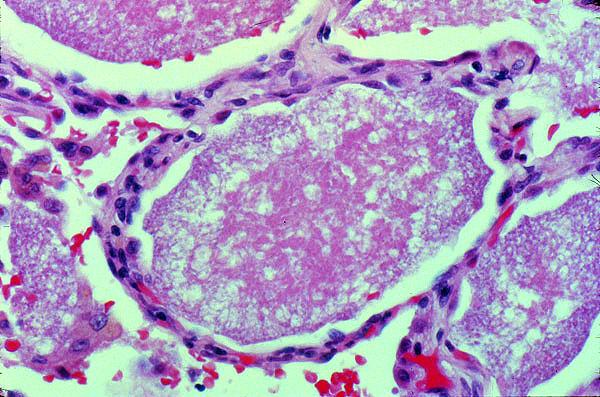 Pneumocystis carinii
 Kaposi's
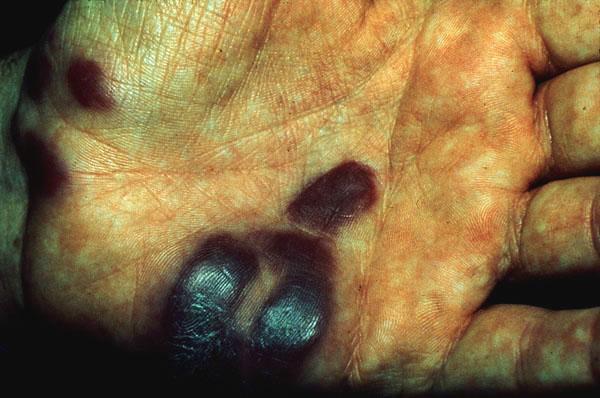 Kaposi's sarcoma
 Kaposi's sarcoma